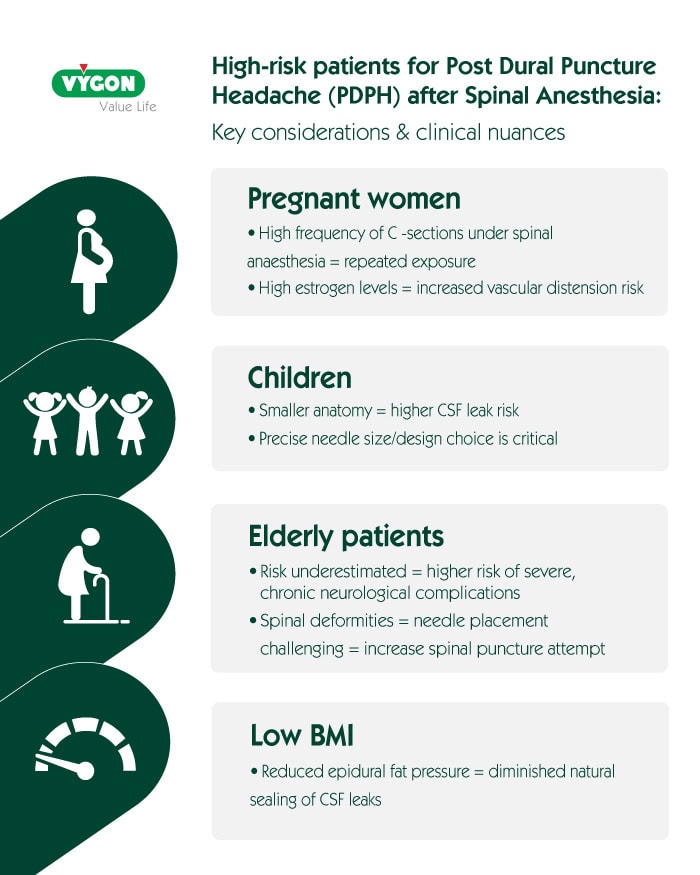
This infographic highlights key patient groups at increased risk of developing Post‑Dural Puncture Headache (PDPH) following spinal anaesthesia, providing a clear and structured overview of clinical considerations.
The visual organises four main populations pregnant patients, paediatric patients, elderly individuals, and patients with low body mass index (BMI) each associated with specific physiological or procedural risk factors.
Pregnant patients are exposed more frequently to spinal anaesthesia, particularly during caesarean sections, while hormonal influences may increase vascular sensitivity. In paediatric patients, smaller anatomical structures make precise needle selection essential, as even minor variations can increase cerebrospinal fluid (CSF) leakage. Elderly patients often present anatomical challenges such as spinal deformities, which can lead to multiple puncture attempts and a higher complication risk.
Meanwhile, individuals with low BMI may have reduced epidural pressure, limiting the natural sealing of the dural puncture.
Together, these factors underline a crucial clinical message: PDPH risk is not only procedure‑dependent but also patient‑specific. Identifying these high‑risk profiles allows healthcare professionals to adapt needle choice, technique, and approach more effectively.
👉 To explore how these factors connect with needle design and clinical practice, read the full article and discover evidence‑based strategies for PDPH prevention.