High-risk patients for PDPH in anaesthesia


Comprendre les avantages de la méthode LISA est essentiel pour les professionnels en néonatologie qui recherchent des stratégies fondées sur des données probantes afin d’améliorer les résultats respiratoires chez les prématurés. Cette infographie propose une présentation claire et visuelle des bénéfices respiratoires précoces — tels qu’un risque réduit de décès ou de dysplasie bronchopulmonaire (DBP) et une moindre nécessité d’intubation — ainsi que des effets à long terme, notamment une amélioration du développement neurologique et un taux de survie plus élevé sans complications sévères. Si vous souhaitez un aperçu rapide et percutant des raisons pour lesquelles LISA devient l’approche privilégiée dans le monde entier, cette infographie téléchargeable vous apportera les informations clés en un coup d’œil.


This infographic highlights key patient groups at increased risk of developing Post‑Dural Puncture Headache (PDPH) following spinal anaesthesia, providing a clear and structured overview of clinical considerations.

The visual organises four main populations pregnant patients, paediatric patients, elderly individuals, and patients with low body mass index (BMI) each associated with specific physiological or procedural risk factors.

Pregnant patients are exposed more frequently to spinal anaesthesia, particularly during caesarean sections, while hormonal influences may increase vascular sensitivity. In paediatric patients, smaller anatomical structures make precise needle selection essential, as even minor variations can increase cerebrospinal fluid (CSF) leakage. Elderly patients often present anatomical challenges such as spinal deformities, which can lead to multiple puncture attempts and a higher complication risk.

Meanwhile, individuals with low BMI may have reduced epidural pressure, limiting the natural sealing of the dural puncture.
Together, these factors underline a crucial clinical message: PDPH risk is not only procedure‑dependent but also patient‑specific. Identifying these high‑risk profiles allows healthcare professionals to adapt needle choice, technique, and approach more effectively.

👉 To explore how these factors connect with needle design and clinical practice, read the full article and discover evidence‑based strategies for PDPH prevention.
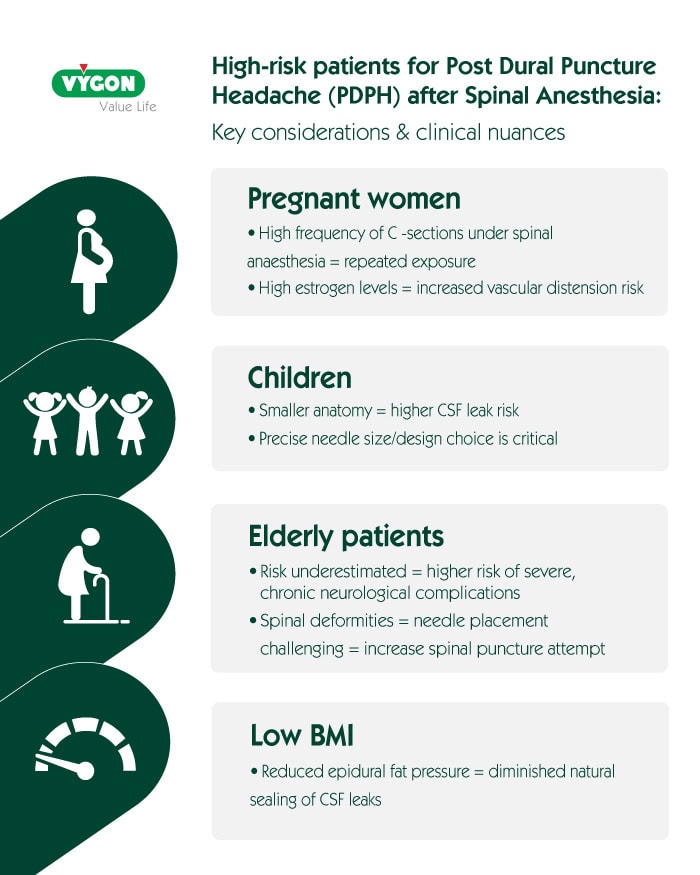
Medical infographic titled “High‑risk patients for Post Dural Puncture Headache (PDPH) after Spinal Anaesthesia: Key considerations and clinical nuances.” The visual presents four patient groups with icons on the left side: pregnant patients, paediatric patients, elderly patients, and low BMI patients. Each category includes key risk factors. Pregnant patients are associated with repeated exposure to spinal anaesthesia and hormonal vascular effects. Children are linked to smaller anatomy and increased cerebrospinal fluid (CSF) leak risk. Elderly patients are associated with spinal deformities and increased puncture attempts. Low BMI patients are linked to reduced epidural pressure and decreased natural sealing of CSF leaks.
Proximal-Cut PICC Catheter Insertion

Proximal-Cut PICC Catheter Insertion

This infographic provides a step‑by‑step visual guide to Proximal‑Cut PICC catheter insertion. It illustrates the full workflow from ultrasound‑guided venous access and guidewire introduction to catheter advancement, tip position confirmation using ECG‑IC, proximal...

read more
Share This