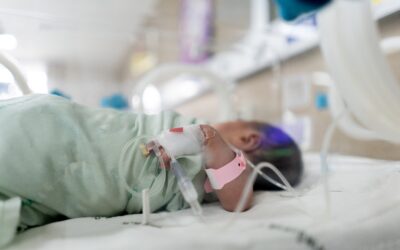

The first hour of a premature baby’s life is known as the ‘Golden Hour’. Research shows that what happens in the first hour of a premature baby’s life is the most crucial and can make a difference between a good outcome and a poor outcome or, the worst-case scenario of all, death.
By focusing on the key stages of thermoregulation, resuscitation, administration of antibiotics and parenteral nutrition, hypoglycaemia management and admission into the NICU, the risks of morbidity and mortality decrease1.
For some high-risk babies, these key interventions can last for hours, or even days. Recognising the importance of the ‘Golden Hour’ principles, along with improvements in medicine and more effective technology, means that survival rates are increasing.
Mastering this first hour, the Golden Hour, allows clinicians to give their youngest, and most vulnerable patients the best possible start in life.
Core Components of Golden Hour Care
There are five core components of Golden Hour care. Each one plays a vital role in stabilising and protecting a newborn in those first critical moments. They are:
- Thermoregulation
- Delayed cord clamping
- Respiratory support
- Vascular access,
- Early nutrition and medication.
Together, these steps help reduce risks and give fragile babies the best possible start.
Thermoregulation
Immediately after a premature baby is delivered, especially by c-section, the priority is to place them in a warm and sterile environment, for example a sterile heat loss prevention suit. This also provides additional protection so other essential Golden Hour care and treatment, including delayed cord clamping, can take place.2,3
Thermal care is vital for a preterm infant because they may have an unbalanced skin-surface to weight ratio, very little or no capacity to generate heat (brown adipose tissue), inadequate stores of subcutaneous (insulating) fat and an immature epidermal barrier4,5
Suits with the following features, support the delivery of life-saving thermal care:
- Adjustable hood to fit the baby’s head, decreasing heat loss through radiation
- Double layers of soft, clear transparent polyethylene to decrease heat loss through convection and evaporation, mimicking the incubator effect, and allowing for passage of radiant heat from additional warming devices6, and allowing for vital observations7
- VELCRO® opening, to provide an optimum seal to ensure heat conservation, and allow full access to the baby’s body for easy placement of monitoring equipment, IV, umbilical catheters and supports Golden Hour care.
Delayed Cord Clamping
Provided the baby can be kept warm and does not need immediate resuscitation, the Resuscitation Council UK (RCUK) recommends delayed cord clamping (DCC) for at least 60 seconds whilst breathing is established8.
Delayed cord clamping has been shown to reduce the relative risk of:
- Intraventricular haemorrhage by 41% (RR 0.59, 95% CI 0.41 to 0.85)9
- Necrotising enterocolitis by 38% (RR 0.62, 95% CI 0.43 to 0.90)9.
In addition, this procedure increases circulation of blood volume after birth and an improvement in cardiovascular stability, reducing the need for a blood transfusion.
Respiratory Support
Respiratory distress syndrome (RDS) is the most common lung disease in premature infants and is a pulmonary disorder resulting from a surfactant deficiency. In Europe RDS is observed for about 90% of babies born at 24 weeks and for 80% babies born at 28 weeks of gestation10. There are a set of international guidelines recommended for this scenario:
- Preterm infants should be managed without mechanical ventilation where possible
- Continuous positive airway pressure (CPAP) with early rescue surfactant is considered optimal management for babies with RDS
- LISA is the preferred mode of surfactant administration for spontaneously breathing babies on CPAP, provided that clinicians are experienced with this technique10.
For babies needing treatment for RDS, it is therefore important to use a device which uses the LISA (Less Invasive Surfactant Administration) technique to place the catheter. Specifically designed to improve manoeuvrability during placement whilst also eliminating the need for the commonly used Magill forceps.
Vascular Access
It is essential to establish safe and effective vascular access as early as possible in preterm infants. Infants born prematurely, weighing under one kilogram, often need rapid access for nutritional and therapeutic support which is delivered into their tiny vessels, while minimising insertion trauma and infection risk. Evidence shows needle and IV exposure is stressful for neonates, so first‑pass success and vessel preservation are priorities.
The umbilical route is the primary option in the delivery room as it provides immediate venous and arterial access. Choose single, double or triple lumen catheters according to therapy complexity and the need to keep incompatible infusions separate.
For longer-term therapy and complex multi-drug regimens, transition to neonatal PICC (peripherally inserted central venous catheters) lines is often required. These should be selected based on patient weight and vessel size to ensure safety and effectiveness. The Modified Seldinger Technique (MST) is the preferred method for PICC placement as it improves first-attempt success and reduces trauma compared to traditional approaches such as the split-needle or peelable cannula techniques. MST can help to preserve vascular integrity, which is critical in very low birth weight infants where repeated attempts can compromise their fragile vessels. By using MST, clinicians can also achieve reliable access while minimising stress and pain for the most vulnerable patients.
Nutrition and Medication
Early nutrition and medication are essential parts of Golden Hour care. Preterm babies have very limited energy reserves and are at higher risk of hypoglycaemia, which can lead to serious complications if not managed quickly. Starting parenteral nutrition soon after birth helps maintain blood glucose levels and supports growth and development.
Antibiotics are often given early to reduce the risk of sepsis, which remains one of the leading causes of neonatal morbidity and mortality. These interventions need reliable vascular access, which is why umbilical catheters or PICC lines are placed as part of the Golden Hour process. Using systems designed for neonatal use ensures safe and efficient delivery of multiple medications and nutrition without compromising sterility.
However, IV access is limited and fragile, so certain medications are given orally, a prime example is caffeine which is effectively absorbed when taken orally. Having a reliable enteral feeding tube and supporting devices for reliable medication delivery is crucial.
Conclusion
The first hour after birth sets the tone for a premature baby’s survival and long-term health. By prioritising the five core components of Golden Hour care; thermoregulation, delayed cord clamping, respiratory support, vascular access, and early nutrition and medication, clinicians can significantly reduce the risks of morbidity and mortality. For some babies, these interventions extend well beyond the first hour, reinforcing the need for planning, teamwork and the right technology. Mastering this critical window gives the most vulnerable patients the best possible start in life.
References
- Doyle, K.J., & Bradshaw, W. T. (2012). Sixty Golden Minutes. Neonatal Network: The Journal of Neonatal Nursing, 31(5), 289-294.
- Rabe H, Diaz-Rossello JL, Duley L, Dowswell T. Effect of timing of umbilical cord clamping and other strategies to influence placental transfusion at preterm birth on maternal and infant outcomes. Cochrane Database Syst Rev 2012;8 CD003248.
- Backes CH, Rivera BK, Haque U, et al. Placental transfusion strategies in very preterm neonates: a systematic review and metaanalysis. ObstetGynecol2014; 124:47-56
- T. Cordaro and al. Hypothermia and occlusive skin wrap in the low birth weight premature infant. NAINR. 2012;12(2):78-85.
- B. Mathew and al. Vinyl Bags prevent hypothermia At Birth in Preterm Infants. 2006.
- W.WMV, Mori R. Interventions to prevent hypothermia at birth in preterm and/or low birth weight infant. RHL.
- T. Cordaro and al. Hypothermia and occlusive skin wrap in the low birth weight premature infant. NAINR. 2012;12(2):78-85.
- Resuscitation-Council-UK-(RCUK).Newborn Life Support – National Resuscitation Guidelines. 2015
- Rabe H, Diaz-Rossello JL, Duley L, Dowswell T. Early cord clamping versus delayed cord clamping or cord milking for preterm babies. Cochrane Database Syst Rev 2012;15 CD003248.
- David G. Sweet et al. ,European Consensus Guidelines on the Management of Respiratory Distress Syndrome – 2019 Update.

A place to learn about health procedures and techniques from leading professionals.