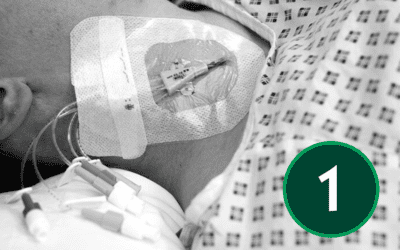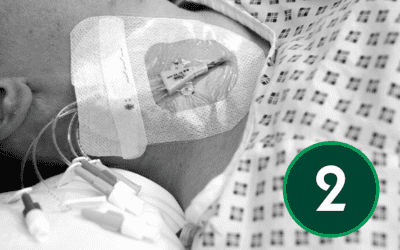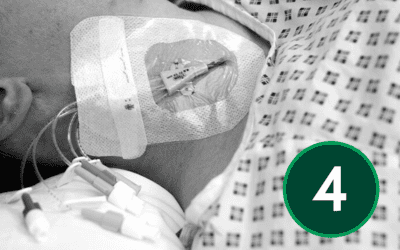

Infections related to central venous catheters remain a significant cause of healthcare-associated bacteraemia and septicaemia[1]. Infections from central venous catheters can come with a significant risk of morbidity and mortality. It is important therefore to understand the risks and how to mitigate them. To do this we must understand how bacteria can form in relation to CVCs.
Classification of Infections
Vascular access catheter infections in relation to CVCs can be broken down into two types; local infection and systemic infections[2]. With both of these types of infections, there are multiple risk factors to consider, these are:
- Age
- Genetics
- Immunosuppression
- Immunocompromised
- Loss of skin integrity
- Multiple invasive procedures
- Antibiotic therapy
- Presence of distant infection
- Poor nutrition.
Microorganisms
Microorganisms are everywhere and can come from human skin or the general environment. As humans we liberate microorganisms through acts such as coughing. Skins scales are always being eliminated during desquamation, and these can be carried through the air while bed making etc[3].
The skin is the main source of bacteria responsible for IV associated infections and therefore requires meticulous preparation. It is important to note, when preparing a patient for CVC insertion, it is difficult to remove all microorganisms from the skin with friction, one of which, resident flora (S.aureus and S. epidermidis), is a major cause of IV infections. Different parts of the skin contain different amounts of and types of flora and this is often determined by the moisture factor.
While resident flora plays an important role in the prevention of colonisation of the skin by other potentially pathogenic organisms through the physical advantage of previous occupancy, competing for essential nutrients, and producing inhibitory substances such as fatty acids which discourage other species of organisms from evading. It can spread into previously sterile parts of the body, for example, when the body is breached by an IV device. It can also be disturbed after administration of antibiotics which can then lead to an overgrowth of potentially pathogenic resident microorganisms[4].
Colonisation of Microorganisms
The microorganisms most commonly associated with CVC infection are coagulase-negative staphylococci, S. aureus, different species of aerobic gram-negative bacilli, and C. albicans. These bacteria can colonise a CVC in multiple ways causing catheter related bloodstream infections and phlebitis, which have serious complications.
These can arise from numerous routes, including;
- Extraluminal colonisation – Bacteria which originates from the skin migrates along the outside surface of the CVC. It usually occurs during insertion of shortly after. Typically, this arises due to inadequate skin disinfection for insertion and during dressing management
- Haematogenous seeding of the catheter tip – Bacteria which is already present in the bloodstream attach to the catheter tip causing a secondary infection. This bacterium usually comes from a pre-existing infection
- Intraluminal colonisation of the hub and lumen of the CVC – Bacteria enter and grow inside the CVCs lumen or hub where the IV lines connect after insertion. This is due to poor aseptic technique during device insertion, during care, and whilst maintaining device access, for example contaminated hands, improper handling, or non-sterile equipment.
- Poor device securement causing catheter movement and friction, see article 7. Inadequate device site selection (areas of flexion), or from moisture, heat and hair at insertion site.
Other risk factors include:
- Type of catheter used
- Method and site of insertion
- Purpose of use
- Level of aseptic technique.
Preventing colonisation involves strict aseptic technique, regular site care, and early removal of unnecessary catheters.
Routes of Infections
Extraluminal
This refers to the migration and entry of bacteria down the insertion site on the external surface of the catheter. The bacteria can originate from the air, or the skin of the patient or healthcare worker, also from dressings etc.
Intraluminal
This refers to entry through the infusion system, usually via fluids or additives. The catheter hub is also a source, and this can occur during manipulation.
Haematogenous spread
This is the migration of organisms from a distant site of infection e.g. bowel or lungs, wound or stoma etc. This means the catheter is colonised from a remote unrelated site.
Contaminated infusates
This refers to the intravenous fluids or medications that have been tainted by harmful microorganisms such as bacteria or fungi. They pose a serious risk of infection, including bloodstream infections and sepsis, especially in vulnerable patients.
Infection Prevention and Aseptic Techniques
It is important to ensure proper infection prevention techniques are employed, including hand hygiene, and aseptic non-touch techniques and surgical scrub. Most transient microorganisms found on the skin can be removed by washing with soap and water, whilst resident microorganisms will be reduced by washing with an antiseptic detergent[5]. Despite scrupulous cleaning, the skin can never be rendered sterile, the aim of these techniques is to make sure the skin is socially clean.
Hand Hygiene
An effective handwashing technique involves three stages: preparation, washing and rinsing, and drying.
For preparation, wet hands under tepid running water before applying liquid soap or an antimicrobial preparation. The hand wash solution must come into contact with all of the surfaces of the hand. The hands must be rubbed together vigorously for a minimum of 10 to 15 seconds, paying particular attention to the tips of the fingers, the thumbs and the areas between the fingers. Rinse hands thoroughly before drying with good quality paper towels.
When decontaminating hands using an alcohol hand rub, ensure that hands are free from dirt and organic material. The hand rub solution must come into contact with all surfaces of the hand. The hands must be rubbed together vigorously, paying particular attention to the tips of the fingers, the thumbs and the areas between the fingers, until the solution has evaporated and the hands are dry.
Apply an emollient hand cream regularly to protect skin from the drying effects of regular hand decontamination. If a particular soap, antimicrobial hand wash or alcohol product causes skin irritation, consult an occupational health team[6].
Aseptic Non-Touch Technique (ANTT®) and Surgical Scrub
ANTT® is a method to prevent contamination of wounds and other sites by ensuring that only sterile items come into contact with the insertion site. The environment for the procedure should also be as clean as possible[7]. It must be used for all medium to long term vascular access device insertions, for site care and for accessing the system. There are two main types of ANTT®: Standard ANTT® and Surgical ANTT®.
Surgical ANTT® should be used for all vascular access device placements and includes the use of gown, gloves and sterile surgical drapes1.
Sterile ANTT® is suitable for drug administration, phlebotomy and cannulation[8].
Cutaneous Antisepsis
Skin preparation is of great importance in reducing the risk of site infection. The choice of solution for skin cleansing is also important and it is imperative to meticulously cleanse the venous insertion site prior to catheter insertion.
The choice of an effective antiseptic solution to disinfect the insertion site before catheter placement and during subsequent care is one of the most important measures[9].
The most recent EPIC 3 guidance1 and CDC guidelines[10] suggest that chlorhexidine solution greater than .05% in 70% alcohol is adequate for cutaneous preparation.
Conclusion
Preventing these infections requires a comprehensive approach that includes meticulous aseptic technique, effective hand hygiene, appropriate skin antisepsis, and adherence to ANTT® principles. Understanding the routes of microbial entry and the role of both resident and transient flora is essential in reducing the risk of colonisation and subsequent infection. By addressing both procedural and patient-related risk factors, healthcare professionals can significantly improve patient outcomes and reduce catheter-related complications.
Continue Reading
- Article 1: Understanding CVCs: Roles, Anatomy, and Device Selection
- Article 2: Preparing for CVC Insertion – Patient Assessment, Consent, and Pain Management
- Article 3: Infection Prevention and Aseptic Techniques
- Article 4: Foundations of Ultrasound Physics and Applications
- Article 5: Central Venous Lines – Insertion Techniques and Pain Management
- Article 6: Navigating Complications in Central Venous Access
- Article 7: Post-Insertion Care, Maintenance and Safe Removal
References
[1] Loveday, H.P. et al (2013) epic3: National Evidence-Based Guidelines for Preventing Healthcare-Associated Infections in NHS Hospitals in England. London: Elsevier Ltd.
[2] Elliott TSJ et al (1995) An audit programme for central venous access catheter associated infections. Journal of Hospital Infection: 30 (3) 181 – 191
[3] Tsai, DM. Caterson, EJ (2014) Current preventative measures for health care associated surgical site infections: a review. Biomed Central. Patient Safety. 8:42
[4] Dancer SJ (2004) How antibiotics can make us sick: the less obvious adverse effects of antimicrobial chemotherapy. The Lancet: 4 (10) 611 – 619
[5] Ayliffe G, Fraise A, Geddes A, et al, eds. (2000). Control of Hospital Infection – A Practical Handbook. 4th ed. London: Arnold.
[6] World Health Organisation (2009) Guidelines on hand hygiene in healthcare. [Available online] http://www.who.int/gpsc/5may/tools/9789241597906/en/ accessed March 2016
[7] Hart. S (2007) Using an aseptic technique to reduce the risk of infection. Nursing Standard 21 (47) 43 – 48
[8] Rowley S, Clare S (2011) ANTT: a standard approach to aseptic technique. Nursing Times 107(36)
[9] Maki, DG. Ringer, M. Alvarado, CJ (1991) Prospective randomised trial of povidone iodine, alcohol and chlorhexidine for the prevention of infection associated with central venous and arterial catheters. Lancet. 338: 339 – 343
[10] Centers for Disease Control and Prevention (2011) Guidelines for the Prevention of Intravascular Catheter-Related Infections. http:// tinyurl.com/4yg8bh9 (accessed March 2016)