

Invasive arterial blood pressure monitoring is widely used to support haemodynamic assessment in operating theatres, intensive care units and emergency settings. Clinicians rely on arterial pressure measurements to guide fluid therapy, vasopressor administration and the recognition of haemodynamic instability. Yet even when an arterial line is functioning correctly, inaccurate measurements can occur if the pressure transducer is not levelled appropriately.
Correct transducer levelling at the phlebostatic axis is one of the simplest ways to ensure accurate haemodynamic data. When this fundamental step is overlooked, displayed blood pressure values may not reflect the patient’s true physiological state, potentially influencing treatment decisions and clinical outcomes.
This article explores why levelling matters, how errors occur, and what healthcare professionals can do to maintain measurement accuracy.
What Is the Phlebostatic Axis?
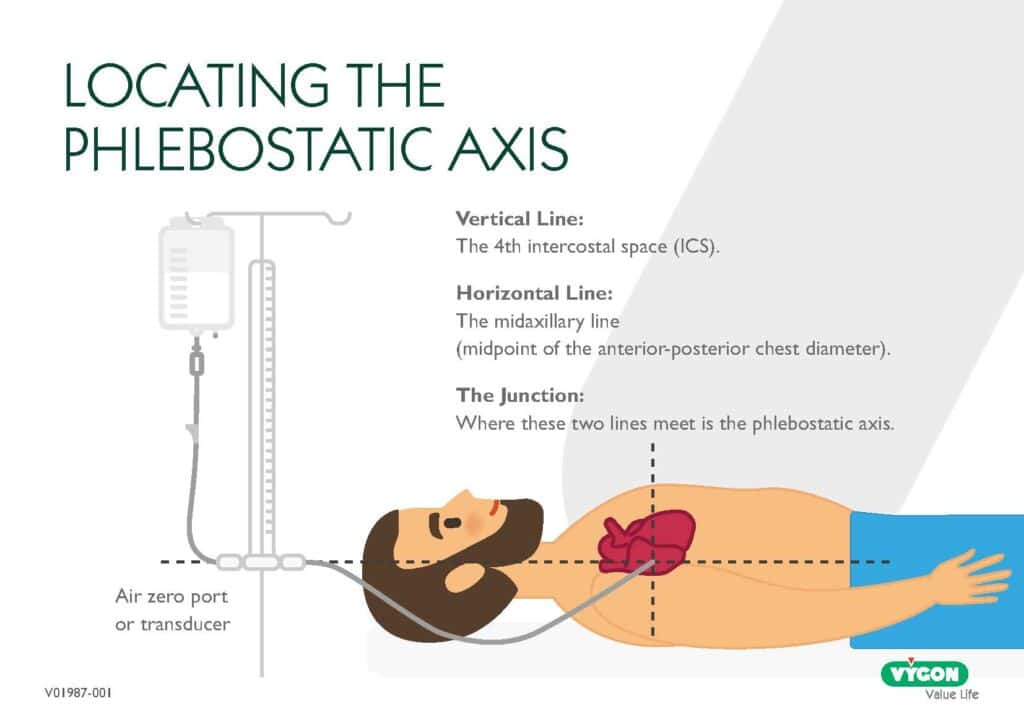
The phlebostatic axis is the standard anatomical reference point used when measuring intravascular pressures. It approximates the position of the right atrium and is generally identified at the intersection of:
- The fourth intercostal space
- The mid-axillary line
By positioning the transducer at this level, clinicians establish a consistent zero reference point that minimises the effect of gravity on pressure measurements.
Whether monitoring arterial pressure or central venous pressure, the phlebostatic axis remains the accepted reference level for obtaining accurate haemodynamic values.
Why Does Transducer Height Affect Blood Pressure Measurements?
An arterial monitoring system measures pressure through a continuous fluid column that extends from the patient’s artery to the transducer. Because fluids are influenced by gravity, the height of the transducer relative to the heart directly affects the pressure recorded.
If the transducer is positioned too high -> The monitor displays a falsely low blood pressure.
If the transducer is positioned too low -> The monitor displays a falsely high blood pressure.
This error affects systolic, diastolic and mean arterial pressure (MAP) values equally because the entire pressure measurement is shifted by hydrostatic forces.
How Much Error Can Incorrect Levelling Create?
Levelling errors are not merely theoretical. Small changes in transducer position can create clinically significant inaccuracies.
As a rule of thumb, a vertical displacement of approximately 10 cm results in a pressure error of around 7.5 mmHg.
Consider a patient with a true MAP of 65 mmHg:
| Transducer Position | Displayed MAP |
| 10 cm above phlebostatic axis | Approximately 57-58 mmHg |
| Correctly levelled | 65 mmHg |
| 10 cm below phlebostatic axis | Approximately 72-73 mmHg |
In many critically ill patients, a difference of 7-8 mmHg could influence whether clinicians increase vasopressor support, administer fluids or escalate care.
Many haemodynamic treatment algorithms use specific MAP targets, particularly in patients with shock. When treatment decisions are guided by threshold values, even modest measurement errors can alter clinical management.
How Levelling Errors Can Affect Clinical Decision-Making
Arterial pressure measurements frequently guide high-stakes treatment decisions.
For example, a patient with septic shock may have a target MAP of 65 mmHg or higher. If the transducer is positioned above the phlebostatic axis, the monitor may display an artificially low pressure. Clinicians may respond by:
- Increasing vasopressor doses
- Administering additional intravenous fluids
- Investigating apparent haemodynamic deterioration
However, the patient’s true blood pressure may already be at target.
The opposite scenario can be equally problematic. When the transducer sits below the reference point, blood pressure readings may appear reassuring despite underlying hypotension. This may lead to:
- Delayed recognition of deterioration
- Undertreatment of shock
- Missed opportunities for intervention
In both cases, the issue is not the patient’s physiology but the accuracy of the measurement system.
Clinical Example
A ventilated ICU patient is repositioned from an elevated, flat position, following routine nursing care, to a 45-degree head-up position. The arterial transducer remains attached to an IV pole and is not re-levelled.
The MAP falls from 68 mmHg to 60 mmHg.
Before increasing vasopressor therapy, the team rechecks the transducer position and discovers it is now several centimetres above the phlebostatic axis. Once levelled correctly, the MAP returns to 68 mmHg without any treatment adjustment.
This simple scenario illustrates how measurement errors can mimic clinical deterioration.
Common Causes of Incorrect Levelling
Establishing the correct transducer position is only the first step. Maintaining that position can be challenging throughout a patient’s care journey.
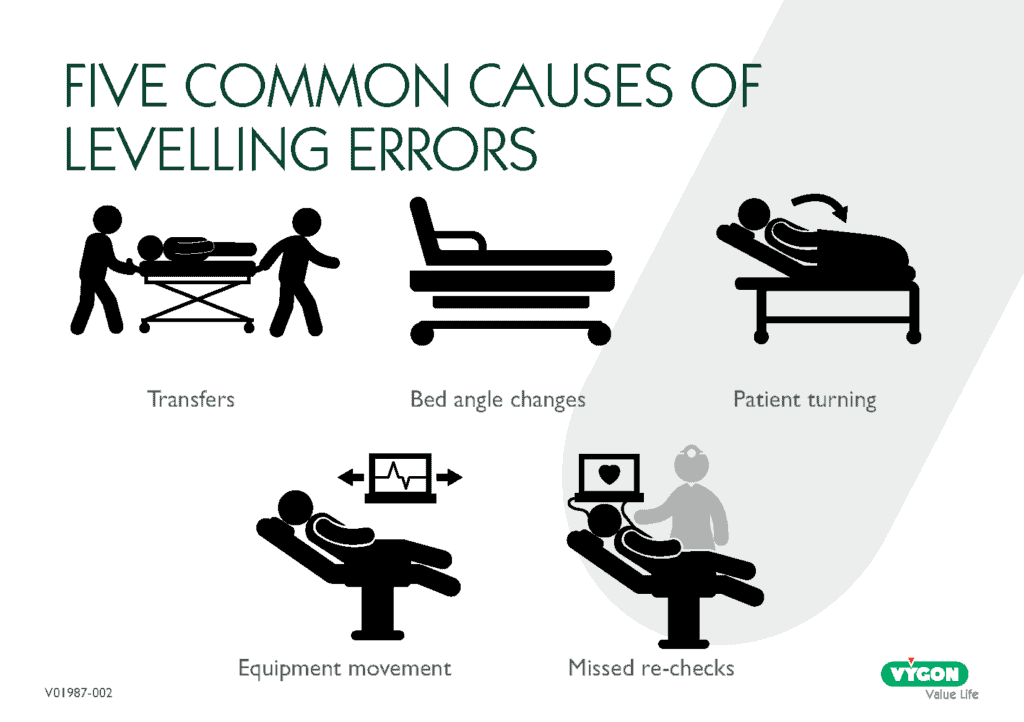
Common causes of error include:
Patient repositioning
- Raising or lowering the head of the bed
- Lateral positioning
- Mobilisation into a chair
Bed adjustments
- Altering bed height
- Trendelenburg positioning
- Reverse Trendelenburg positioning
Patient transfers
- Theatre to recovery
- Emergency department to ICU
- Bed-to-bed transfers
Equipment movement
- Relocating transducer stands
- Moving monitoring systems
- Repositioning infusion equipment
Human factors
- Levelling checked during insertion but not reassessed later
- Variable staff training
- Lack of standardised protocols
Levelling and Zeroing: Not the Same Thing
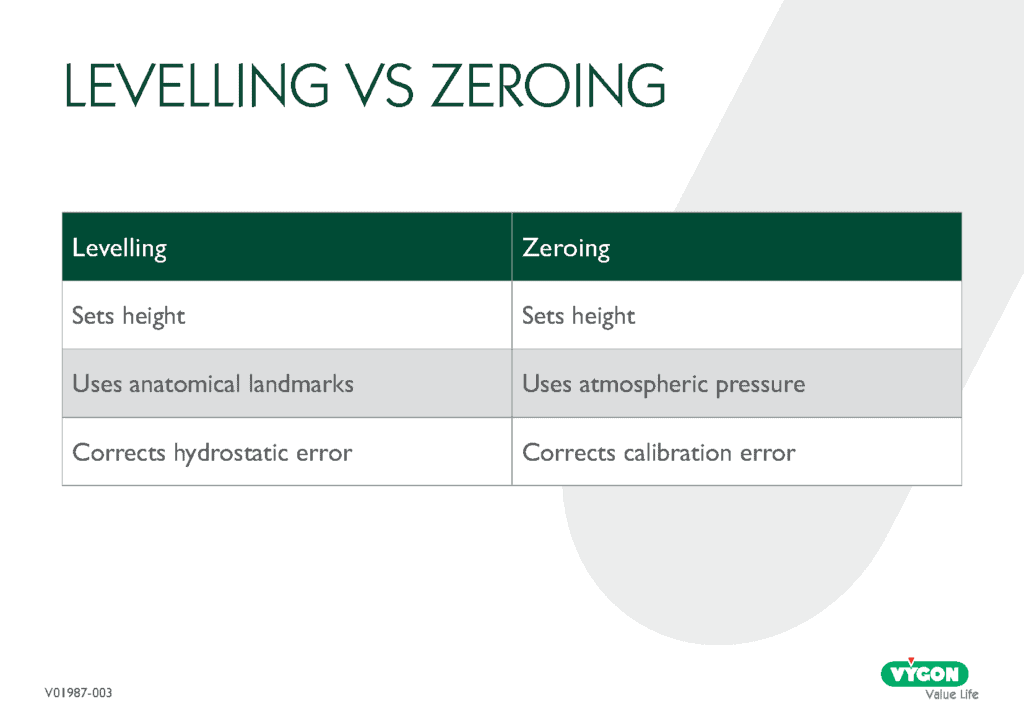
Levelling and zeroing are closely related but serve different purposes.
Levelling – Positions the transducer at the correct anatomical reference point.
Zeroing – Calibrates the system to atmospheric pressure and establishes a measurement baseline.
A transducer can be perfectly zeroed but incorrectly levelled, resulting in inaccurate readings. Equally, a correctly levelled transducer that has not been zeroed appropriately may also produce erroneous values.
Accurate invasive blood pressure monitoring requires both processes.
A Simple Troubleshooting Question
When an arterial pressure reading appears inconsistent with the patient’s overall condition, clinicians should pause before assuming physiological deterioration.
A useful question is:
Could this reading be wrong?
Unexpected values should prompt assessment of:
- Waveform quality
- Damping or resonance
- Tubing and connections
- Transducer levelling
- Zeroing status
Only once measurement accuracy has been confirmed should treatment decisions be based on the displayed values.
Best Practice Recommendations
To improve measurement accuracy and reduce avoidable errors:
- Level the transducer at the phlebostatic axis before monitoring begins.
- Reassess levelling after every patient position change.
- Confirm the transducer position following transfers.
- Include level checks within routine line assessments.
- Educate staff on the impact of hydrostatic pressure errors.
- Investigate unexpected readings before altering treatment.
- Incorporate levelling competency into haemodynamic monitoring training programmes.
The Bottom Line
Accurate haemodynamic monitoring begins with accurate measurement. Regardless of the sophistication of the monitoring technology, incorrect transducer positioning can lead to misleading arterial pressure values and inappropriate clinical decisions.
Levelling the transducer at the phlebostatic axis is a simple but essential step that helps ensure blood pressure measurements reflect the patient’s true physiological status. By understanding the principles behind levelling, recognising common sources of error and incorporating routine checks into practice, clinicians can improve data accuracy and support safer patient care.

A place to learn about health procedures and techniques from leading professionals.