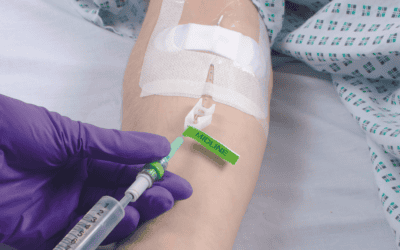
Needle-free connectors are a small but critical component of intravenous (IV) therapy. Positioned at the end of vascular access devices (VADs), they are the primary access point for administering fluids, medications, and nutrition, as well as for blood sampling and...
Choosing the Right Needle‑Free Connector
Choosing the Right Needle‑Free Connector is a focused six-part educational series designed to support clinicians in the safe and effective selection and management of needle‑free connector technology. The series explores key considerations including device design and functionality, fluid dynamics and reflux, infection prevention principles, compatibility with vascular access devices, and the impact of clinical practice on outcomes. It also examines current evidence, standards, and guidelines that inform decision-making in a range of care settings. With an emphasis on patient safety, consistency of practice, and evidence-based care, the series strengthens clinician understanding and confidence in selecting and using needle‑free connectors appropriately across the vascular access pathway.

Article 2: Understanding Needle-Free Connector Design Types – Split Septum vs Mechanical Valve
Once clinicians understand what a needle‑free connector is and why it matters, the next logical step is to explore how connector design influences clinical performance. Although needle‑free connectors may appear similar externally, internal design differences can...
Article 3: Fluid Displacement Options – Neutral, Positive and Negative
Having explored needle‑free connector design types, the next critical factor to consider is fluid displacement. Although often less visible than external design features, fluid displacement plays a central role in catheter patency, blood reflux, and the risk of...
Article 4: Safety and Disinfection – Preventing Contamination
Needle‑free connectors are the most frequently accessed part of a vascular access device. Each access event presents an opportunity for microorganisms to enter the catheter lumen, making the connector a primary control point for contamination and infection prevention....
Article 5: Mechanical and Clinical Considerations in Device Selection
Selecting a needle‑free connector is not simply a matter of choosing between split septum or mechanical valve designs, or between different fluid displacement categories. In everyday clinical practice, mechanical behaviour, workflow compatibility, and usability all...
Article 6: Patient and Staff Benefits of Choosing the Right Connector
Throughout this article series, we have explored what needle‑free connectors are, how they differ in design and function, and why factors such as fluid displacement, disinfection, and standardisation matter. At the centre of all these considerations is a simple but...