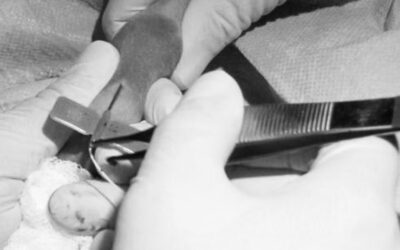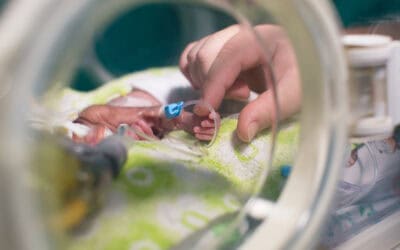

Respiratory Distress Syndrome (RDS) remains one of the most common and challenging conditions in preterm infants. Surfactant replacement therapy has been a cornerstone intervention for decades, traditionally delivered via endotracheal intubation followed by mechanical ventilation. However, rising concerns around ventilation‑induced lung injury have accelerated the adoption of Less Invasive Surfactant Administration (LISA) as an alternative approach. LISA enables spontaneously breathing infants to receive surfactant while supported on CPAP, avoiding the need for intubation in many cases.[1]
This article summarises the evidence comparing LISA to traditional methods (primarily INSURE and intubation/mechanical ventilation), focusing on clinical outcomes relevant to NICU practice.
Overview of LISA and Traditional Methods
Traditional Methods
- Intubation + Surfactant + Mechanical Ventilation: Historically the standard approach, but associated with risks such as volutrauma, atelectrauma, and subsequent bronchopulmonary dysplasia (BPD). [1]
- INSURE Technique (Intubate–Surfactant–Extubate): Developed to reduce time on mechanical ventilation, though it still requires laryngoscopy and brief intubation.
Mechanical ventilation is still clinically required in neonates when respiratory failure cannot be managed with non‑invasive support. Indications span acute physiologic compromise (hypoxemia, acidosis, apnoea), progression of disease (RDS, sepsis, MAS), structural anomalies (CDH), and peri‑operative needs.
Less Invasive Surfactant Administration (LISA)
The LISA technique is generally preferred when a preterm infant with respiratory distress syndrome (RDS) is spontaneously breathing on CPAP and meets criteria for surfactant therapy. Evidence consistently supports LISA as a first‑line approach in these scenarios.
- Surfactant is delivered via a thin catheter during spontaneous breathing on CPAP, reducing airway manipulation and exposure to positive pressure ventilation.[1]
- Growing adoption across European NICUs and increasingly worldwide, supported by multiple RCTs and meta‑analyses.
Evidence Summary: LISA vs. Traditional Approaches
1. Reduces the Need for Mechanical Ventilation
Multiple studies demonstrate a significant reduction in the need for mechanical ventilation with LISA:
- A systematic review of 6 RCTs (895 infants) found LISA reduced the need for mechanical ventilation within 72 hours (RR 0.71) and at any point during NICU stay (RR 0.66).[2]
- Retrospective studies show decreased mechanical ventilation and ventilation duration compared with INSURE. [3]
- A meta‑analysis of 21 RCTs (2,656 infants) confirmed lower odds of intubation/mechanical ventilation with LISA than INSURE. [4]
2. Bronchopulmonary Dysplasia (BPD) and Composite Outcomes
- The same RCT meta‑analysis reported reduced BPD and reduced composite death/BPD at 36 weeks with LISA. [2]
- The meta‑analysis identified lower BPD rates and improved composite outcomes of death/BPD in infants ≤34 weeks.[4]
- However, real‑world trend analysis (2009–2023) showed no statistically significant reduction in combined death/BPD, though mortality alone was lower in the LISA epoch.[5]
3. Mortality
- For reduced mortality rates, evidence is mixed:
- Some large meta‑analyses found LISA associated with reduced mortality. [4]
- A population‐based post‑implementation study showed improved survival but no change in BPD.[5]
4. For Infants ≤34 Weeks Gestation (Strongest Evidence Subgroup)
Subgroup analyses from large meta‑analyses show that:
- LISA’s benefits (reduced BPD, death/BPD, intubation) are most pronounced in infants ≤34 weeks.
Therefore, LISA is particularly preferable for moderate‑to‑late preterm infants who remain spontaneously breathing.
Clinical Implications for NICU Teams
For Consultants
- Decision‑making: Consultants play a pivotal role in determining when and how LISA should be used. Although evidence supports LISA as a first‑line approach for spontaneously breathing preterm infants on CPAP, its success relies on carefully selecting appropriate candidates. This includes assessing gestational age, respiratory effort, oxygen requirements, and the risk of imminent deterioration. Consultants must balance the benefits of avoiding intubation with the need to ensure timely intervention should LISA fail. Effective decision‑making also involves anticipating potential complications – such as apnoea or bradycardia during the procedure – and ensuring the team is prepared for escalation if required.
- Protocol design: Unit‑level guidelines, equipment training, and clear intubation criteria remain essential.
For ANNPs
- Technical proficiency:
ANNPs often perform LISA and therefore require high‑level procedural competence. This includes:
- Demonstrating dexterity with thin‑catheter placement under direct or video laryngoscopy.
- Understanding the nuances of delivering surfactant slowly while maintaining infant stability.
- Coordinating closely with nurses and respiratory therapists to optimise CPAP settings, interface fit, and infant positioning. Proficiency also means maintaining familiarity with multiple LISA devices and techniques to accommodate variation in clinical scenarios.
- Assessment: Close monitoring for CPAP failure or apnoea ensures timely escalation if needed.
For Senior Nurses
- Supportive care:
Senior nurses are central to ensuring the infant remains physiologically stable throughout the procedure. Their responsibilities include:
- Ensuring the infant is positioned optimally, usually in a midline, flexed posture that promotes airway stability and comfort.
- Applying developmental care principles, such as minimising light and noise, to reduce stress and maintain stability.
- Working in synchrony with the practitioner performing LISA, handing equipment, managing CPAP interfaces, and anticipating needs before they arise.
- Surveillance:
Nurses are often the first to notice subtle changes in an infant’s status. During and after LISA, they monitor:
- Desaturation trends, addressing mask leaks or CPAP interface issues promptly.
- Bradycardic episodes, differentiating procedure‑related vagal responses from signs of true clinical deterioration.
- Work of breathing, including changes in grunting, retractions, and respiratory rate. Their vigilance ensures timely escalation and protects infants from preventable complications. Senior nurses also play a key role in educating junior staff, maintaining equipment readiness, and ensuring documentation is complete and accurate.
Conclusion
Across multiple RCTs, meta‑analyses, and real‑world cohort studies, LISA consistently reduces the need for mechanical ventilation and frequently improves important clinical outcomes such as BPD and survival. While some variability remains across different settings and surfactant formulations, the accumulated evidence supports LISA as a preferred strategy for many preterm infants with RDS.
For NICU consultants, ANNPs, and senior nurses, adopting and refining LISA protocols offers a meaningful opportunity to improve neonatal respiratory outcomes while limiting iatrogenic harm.
References
[1] Härtel, C., Kribs, A., Göpel, W., Dargaville, P. & Herting, E. (2024) ‘Less Invasive Surfactant Administration for Preterm Infants – State of the Art’, Neonatology, 121(5), pp. 584–595. doi: 10.1159/000540078
[2] Aldana‑Aguirre, J.C., Pinto, M., Featherstone, R.M. & Kumar, M. (2017) ‘Less invasive surfactant administration versus intubation for surfactant delivery in preterm infants with respiratory distress syndrome: a systematic review and meta‑analysis’, ADC Fetal & Neonatal Edition, 102(1), pp. F17–F23
[3] Araújo, V., Aldeia da Silva, R., Oliveira Pereira, M., Machado, C. & Raposo, F. (2024) ‘Surfactant administration in preterm neonates with respiratory distress syndrome: LISA versus INSURE’, International Journal of Pediatrics and Neonatology, 6(2), pp. 182–190. doi: 10.33545/26648350.2024.v6.i2c.101
[4] Meta‑analysis: Comparative Efficacy of Less Invasive Surfactant Administration (LISA) in Preterm Neonates with RDS: A Systematic Review and Meta‑Analysis. [ce.nemours.org]
[5] de Ridder, R., van Kaam, A.H., Ravelli, A.C.J., Mugie, S., Koomen‑Botman, I., Onland, W. et al. (2025) ‘Short‑Term Outcomes of Implementing Less Invasive Surfactant Therapy in Infants Born Less than 30 Weeks: A Retrospective Trend Analysis’, The Journal of Pediatrics, 286, Article 114721
[6] Mansouri, M., Servatyari, K., Rahmani, K., Sheikhahmadi, S., Hemmatpour, S., Eskandarifar, A. & Rahimzadeh, M. (2024) ‘Surfactant administration methods for premature newborns: LISA vs. INSURE comparative analysis’, Journal of Neonatal‑Perinatal Medicine, 17 [7] Katheria, A. (2025) Early Caffeine and LISA Compared to Caffeine and CPAP in Preterm Infants (CaLI Trial). ClinicalTrials.gov Identifier: NCT04209946. Available at: https://ichgcp.net/clinical-trials-registry/NCT04209946