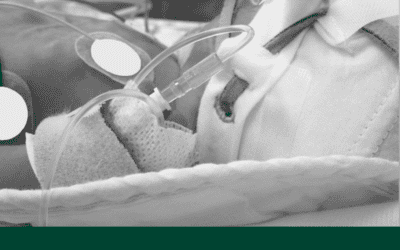

Longline catheters are commonplace in neonatal and paediatric care, providing reliable access for delivering parenteral nutrition, medications, and fluids over extended periods. Traditionally, these catheters are inserted using direct introducer or peelable cannula techniques. However, while widely adopted, these methods present challenges, including multiple venipuncture attempts, increased risk of vein trauma, and higher complication rates such as infection or malposition.
The Modified Seldinger Technique (MST) offers a refined approach that addresses some of these limitations. By combining a micro-puncture entry with guidewire-assisted placement, MST improves both clinical outcomes and procedural efficiency. This article explores how MST works, its advantages over conventional methods, and why it is increasingly recommended in neonatal practice.
MST Applied to Longline Catheters
The classic Seldinger technique revolutionised vascular access by introducing guidewire-assisted catheter placement. MST adapts this principle for fragile neonatal and paediatric vessels.
The process typically involves:
- Micro-puncture needle insertion into the vein.
- Guidewire advancement through the needle.
- Dilator and peelable sheath placement over the guidewire.
- Catheter insertion through the sheath, followed by sheath removal.
Compared to direct introducer methods, MST uses a smaller gauge needle to reduce vessel trauma, and a controlled, stepwise approach. This minimises vessel trauma and reduces the risk of complications.
Key differences from traditional methods:
- Smaller gauge needle reduces vessel trauma.
- Guidewire ensures controlled access and positioning.
- Peelable sheath dilator allows smooth catheter introduction without excessive force.
Clinical Benefits of MST
The Modified Seldinger Technique offers clear advantages over traditional longline insertion methods, particularly in fragile neonatal and paediatric patients. By using a micro-puncture approach and guidewire-assisted placement, MST reduces procedural trauma and improves overall success. These benefits are supported by strong clinical evidence and international best-practice recommendations.
- Higher success rates: Studies show MST improves first-pass and overall success compared to traditional methods (e.g., 72% vs 40% overall success; 53% vs 26% first-pass success).1
- Reduced complications: Lower risk of vein trauma, inadvertent arterial puncture, and nerve injury.2
- Reduced vein trauma – Fewer venepunctures: MST requires fewer attempts per successful insertion (average 2.5 vs 5.6 skin breaks)3.
- Lower infection risk: Significant reduction in CLABSI rates (1.06 vs 3.45 per 1,000 catheter days) compared to conventional techniques.4
- Improved patient comfort: Less pain and stress due to fewer attempts and smaller introducer size.
Cost-Benefit Analysis
While MST may appear more expensive upfront, its true value lies in reducing complications and improving efficiency. When fewer reattempts, reduced need for additional consumables, lower complication rates (infections, vein damage), and shorter procedure times as well as less clinician time spent on repeated attempts are factored in, MST consistently demonstrates cost-effectiveness compared to traditional methods.
Evidence from UK neonatal units shows that the cost per successful insertion of neonatal PICCs is comparable between MST (£156.41) and standard techniques (£152.51); however, MST consistently delivers better clinical outcomes with fewer complications, reduced reattempts and consumable use, and shorter procedure times requiring less clinician time.5
Economic models suggest MST becomes cost-effective when factoring in reduced Central Line-Associated Bloodstream Infection (CLABSI) and reintervention rates.5
Evidence Summary
The advantages of MST are supported by a growing body of research and international guidelines. Studies confirm higher success rates, improved safety, and reduced infection risk, making MST the recommended approach for neonatal and paediatric longline insertion.
- MST is supported by multiple retrospective studies and position statements:
- Success rates up to 90–95% when combined with ultrasound guidance.6,7
- Lower infection rates and improved safety profile in neonates and paediatrics.4
- International guidelines (e.g., NANN) recommend MST for PICC and longline insertion in neonates.8
Practical Considerations
Implementing the Modified Seldinger Technique successfully requires structured training and adherence to protocols. Clinicians need to be competent in using micro-insertion kits that include guidewires, dilators, and peelable sheaths, and should incorporate ultrasound guidance to optimise success and safety. Institutions adopting MST must ensure the availability of appropriate equipment and provide ongoing competency validation to maintain high standards of care.
Conclusion
The Modified Seldinger Technique offers clear clinical benefits for neonatal longline catheter insertion, including higher success rates, fewer complications, and improved patient comfort. These advantages extend beyond clinical outcomes to deliver meaningful cost savings through reduced reattempts, lower infection rates, and shorter procedure times. To realise these benefits fully, adoption should be supported by structured training, competency validation, and institutional protocols that ensure consistent practice and equipment availability. MST represents a proven, evidence-based approach that enhances both safety and efficiency in neonatal vascular access.
References
- MacLeod R, Gibb J, MacLeod R, Mahoney L, Elanjikal Z. 55 Modified seldinger technique for neonatal peripherally inserted central catheter placement. BMJ Paediatrics Open. 2021;5:. https://doi.org/10.1136/bmjpo-2021-RCPCH.35
- Modified Seldinger Technique with Ultrasound for PICC Placement in the Pediatric Patient: A Precise Advantage. Darcy Doellman et al. JAVA (2009) 14 (2): 93–99.
- MacLeod R, Gibb J, MacLeod R, Mahoney L, Elanjikal Z. 55 Modified seldinger technique for neonatal peripherally inserted central catheter placement. BMJ Paediatrics Open. 2021;5:. https://doi.org/10.1136/bmjpo-2021-RCPCH.35
- van Rens MFPT, Hugill K, van der Lee R, Francia ALV, van Loon FHJ, Bayoumi MAA. Comparing conventional and modified Seldinger techniques using a micro-insertion kit for PICC placement in neonates: A retrospective cohort study. Front Pediatr. 2024;12:1395395. doi:10.3389/fped.2024.1395395
- Gibb JJC, MacLeod R, Mahoney L, Elanjikal Z. Modified Seldinger technique for neonatal epicutaneo-caval catheter insertion: A non-randomised retrospective study. J Vasc Access. 2021;1-6. doi:10.1177/11297298211054637
- Goodwin ML. The Seldinger Method for PICC Insertion. J Intraven Nurs. 1989: 12:238-43.
- Dobson L, Wong DG. Development of a Successful PICC Insertion Program. J Vasc Acc Dev. Winter 2001: 31-34.
- NANN. Peripherally Inserted Central Catheters: Guideline for Practice, 4th Edition, 2022