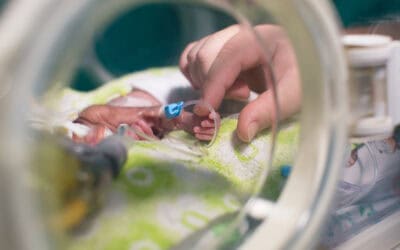

The question of whether neonatal peripherally inserted central catheters (nPICCs) can safely be cut to length continues to arise in clinical practice. Although some clinicians shorten lines to assist with dressing application or reduce external looping, available evidence and clinical guidelines highlight several safety concerns associated with cutting neonatal PICCs.
Overall, current literature does not recommend routine trimming.
Why Cutting Neonatal PICCs Is Not Recommended
1. The PICC Tip Is Engineered for Safety
Neonatal PICC tips are manufactured to be smooth and atraumatic. Altering this engineered tip by cutting the catheter introduces irregular surfaces that may irritate or damage the vessel wall. Vessel irritation is a known contributor to venous thrombosis, already a documented complication of PICCs in neonates.
Cutting the distal end also creates microscopic imperfections where bacteria can attach more easily. Infection remains a major PICC‑related complication in neonates and catheter integrity can meaningfully affect infection susceptibility.
2. Loss of Critical Length Markers
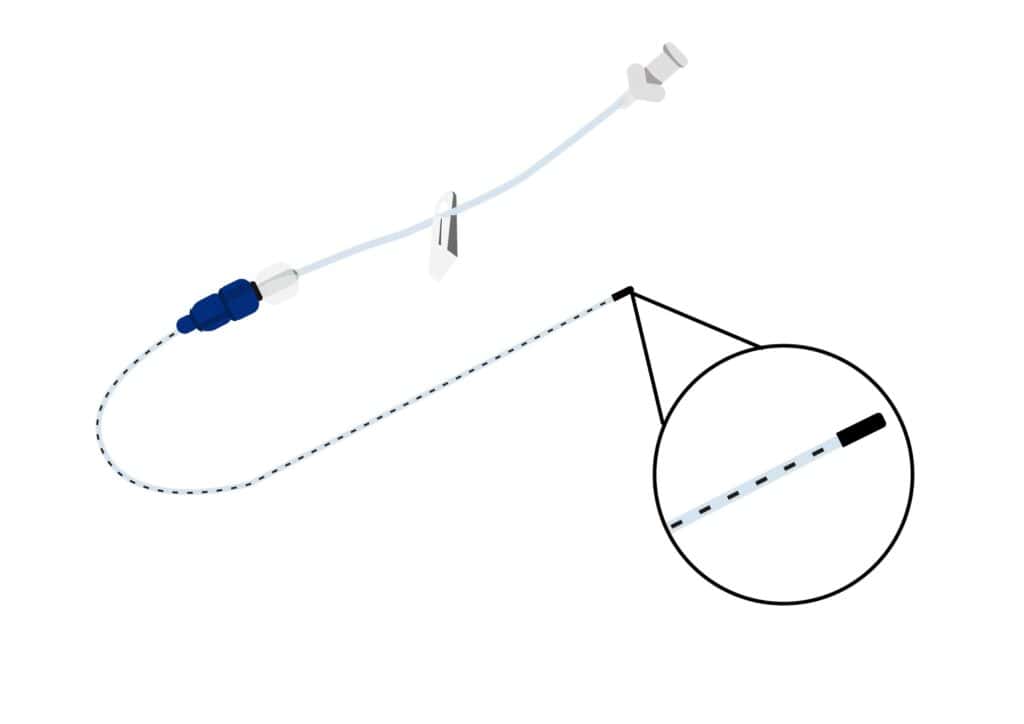
Many neonatal PICCs include distal markers, including a black tip indicator that helps clinicians confirm complete removal. Trimming removes these safety features, which could compromise documentation and increase the risk of retained fragments.
3. Stylet‑Related Concerns
For stylet‑based neonatal PICCs, the stylet must be withdrawn completely prior to any catheter modification. Maintaining full retraction throughout insertion can be technically challenging.
Given the delicacy of neonatal vessels, any increase in the chance of device protrusion or structural instability warrants caution.
Why Some Clinicians Still Cut Neonatal PICCs
Despite these concerns, some clinicians shorten PICCs to:
- Reduce external length and prevent looping or kinking
- Assist with securement and dressing placement
- Adjust for smaller infants when only longer PICCs are available
Practical Alternatives to Cutting
1. Use Skin Glue to Secure the Loop
A small drop of medical‑grade skin adhesive can effectively secure the external loop of the catheter prior to dressing. This method reduces tension and prevents catheter displacement without altering the catheter structure.
2. Select an Appropriate Pre‑Manufactured Length
Most neonatal PICCs are manufactured in multiple lengths (e.g., 15, 20, 30 cm), which helps avoid the perceived need for trimming. Clinicians can select a length that minimises external excess while preserving catheter integrity and safety features.
3. Follow Evidence‑Based Neonatal PICC Care Guidelines
Guidelines from neonatal organizations (e.g., NANN) emphasise atraumatic insertion, tip preservation, radiographic confirmation, and minimising unnecessary manipulation of the catheter – principles that align with avoiding trimming unless absolutely necessary.
If you must cut – keep it clean
If you have to trim a Neonatal PICC lines to length, it is recommended to do so using a specific, manufacturer-provided, or approved, tool (like a guillotine trimmer) to ensure a precise, clean, and, often, straight cut. This procedure minimises the risk of tip embolization, with the catheter tip being cut straight across for a blunt edge. Measuring the catheter to the correct length before insertion is crucial to avoid complications like migration.
Conclusion
While trimming adult or paediatric PICCs is sometimes practiced, the neonatal context is fundamentally different due to smaller vessels, higher complication rates, and the importance of engineered tip design. Current literature and guidelines consistently identify risks – including thrombosis, infection, loss of safety markers, and potential stylet issues – without demonstrating clear benefit.
For these reasons, routine cutting of neonatal PICCs is not recommended. Practical alternatives such as using skin glue for loop securement and choosing appropriate catheter lengths offer safer solutions aligned with best practice.
References
- Jahagirdar D, Featherstone R. Trimmed Peripherally Inserted Central Catheters for Hospitalized Neonatal Patients: A Review of Safety and Guidelines. Canadian Agency for Drugs and Technologies in Health; 2019. [europepmc.org]
- Newborn Critical Care Center (NCCC). Guidelines for Peripherally Inserted Central Catheters. UNC Collaborative for Maternal & Infant Health; 2023. [mombaby.org]
- National Association of Neonatal Nurses (NANN). Peripherally Inserted Central Catheters: Guideline for Practice, 4th Edition. 2022. [ilearn.nann.org]