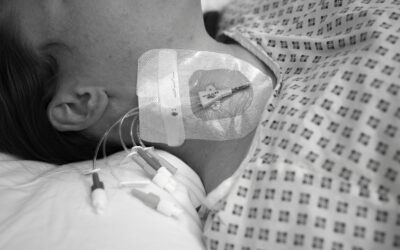
Understanding the patient’s condition before inserting a medical device is a vital step in ensuring safe and effective care. This involves a thorough assessment to determine suitability and identify any potential risks. Equally important is recognising the factors...
CVC
Article 4: Foundations of Ultrasound Physics and Applications
The safe and effective insertion of a central venous catheter (CVC) requires a solid understanding of both the theoretical and practical aspects of the procedure. This includes a foundational knowledge of ultrasound physics and the ability to apply ultrasound guidance...
Article 5: Central Venous Lines – Insertion Techniques and Pain Management
Insertion of central venous lines is becoming more commonly undertaken by specialist nurse-led units[1],[2]. To reduce complications, it is imperative these are only placed by experienced, trained and competent operators[3],[4]. Most guidelines now advise that, in all...
Article 6: Navigating Complications in Central Venous Access
Central venous catheter (CVC) insertion carries a risk of complications which clinicians must be prepared to manage. This article outlines common complications, their causes, methods of prevention, and appropriate clinical responses to ensure safe and effective...
Article 7: Post-Insertion Care, Maintenance and Safe Removal
Following device insertion, it is critical that the device is managed correctly to prevent post insertion complications. According to Loveday et al (2014)[1] and Moreau et al. (2013)[2] Healthcare workers caring for patients with intravascular catheters should be...
Central Venous Access in Cardiac Surgery: “Why use two, when one will do?”
In cardiac surgery, it is commonplace for Anaesthetists to place a sheath introducer, or pulmonary artery catheter, when high volume access is required, along with a standard 4-lumen/quad central venous catheter (CVC) for multi-drug delivery and haemodynamic...
3 benefits of using central venous catheters with rifampicin and miconazole
The proportion of patients who have a central venous catheter (CVC) inserted has increased over the years, so much so that 78% of patients admitted to intensive care units (ICU) in Europe have a CVC inserted.7 However, central venous catheter (CVC) placement...
Keys to Central Venous Line (CVC) Maintenance
One in ten children with a central venous catheter (CVC) develops a device-associated bloodstream infection. 2 Want to know how to prevent bacteremia and central venous catheter-related infection? Dr. Paco Escribà, anaesthesiologist FEA Anaesthesiology for children,...
Subscribe to our newsletter
Keep up to date with all the latest from Campus Vygon UK, by subscribing to our quarterly e-newsletter.
For all the latest in clinical education and articles, infographics, resources, online learning and international webinars and events.