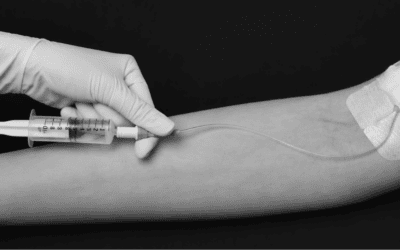

This article summarises a case study poster presented at AVA 2025, highlighting work led by the Vascular Access Service Team at Michigan Medicine to reduce Peripherally Inserted Central Venous Catheter (PICC) line dislodgement in adult patients through the introduction of a subcutaneous anchor securement system.
The Challenge
PICC line dislodgement is more than an inconvenience for patients and staff. When a PICC becomes dislodged, it can interrupt prescribed infusion therapy, delay discharge and require repeat procedures. This has a knock‑on effect on patient experience, length of stay, readmission rates and use of clinical resources. Dislodgement also increases nursing workload and carries an associated risk of central line associated bloodstream infection.
At Michigan Medicine, the Vascular Access Service Team identified adult PICC line dislodgement as a key area for improvement. Working in collaboration with the department’s Education Nurse Coordinator and unit‑based committees, the team set out to find a more reliable and sustainable approach to PICC securement.
Building the Case for Change
A review of current evidence was undertaken using CINAHL and PubMed databases. Findings from the literature supported the use of additional securement methods alongside standard dressings, including subcutaneous anchor securement systems and tissue adhesive.
Based on the evidence and practical considerations, the team selected a subcutaneous anchor securement system for a pilot project. The system was chosen because it remains in place for the life of the catheter and does not require routine replacement, offering both consistency and ease of use.
This approach also aligned with current Infusion Therapy Standards of Practice, which recommend using a securement method in addition to the primary dressing to stabilise and secure vascular access devices.
Implementation Across the Organisation
A new PICC securement protocol was developed and approved by key stakeholders. To support the rollout, enhancements were made to the electronic medical record to allow improved documentation and more robust data collection.
All members of the Vascular Access Service Team completed training on placement, care, maintenance and removal of the subcutaneous anchor securement system in October 2024. Superusers were identified within the department to provide ongoing peer support and education.
To ensure consistent understanding across the organisation, the team partnered with vendor representatives to deliver an education roadshow. Over the course of October 2024, they visited 49 inpatient and ambulatory sites to share updates to the PICC securement protocol and support local teams.
Measuring the Impact
Post implementation, data was collected through electronic medical record review, documentation reports, staff surveys and secondary CLABSI reports. Results before and after implementation were compared to assess the impact of the new securement approach.
The outcomes were significant. PICC line dislodgement dropped from 12.0 percent at baseline to 1.2 percent following implementation, representing a 90 percent reduction. In parallel, adult hospital CLABSI rates decreased by 70 percent.
These results demonstrate the combined effect of evidence‑based product selection, structured education and strong multidisciplinary collaboration.
Key Outcomes
- 90% reduction in PICC line dislodgement – dislodgement rates decreased from 12.0 percent at baseline to 1.2 percent following implementation of the subcutaneous anchor securement system.
- 70% reduction in CLABSI rates – a substantial decrease in central line associated bloodstream infections was observed across the adult hospital during the post implementation period.
- Improved continuity of patient care – fewer dislodgements meant fewer interruptions to prescribed infusion therapy, reduced need for repeat procedures and fewer delays to discharge.
- Time and resource savings for clinical teams – reduced line replacements and troubleshooting lowered nursing workload and supported more efficient use of supplies and staff time.
- Organisation‑wide practice change – based on the success of the pilot, the subcutaneous anchor securement system has been adopted into the standard of care for adult patients at Michigan Medicine.
Changing Practice for the Future
The dislodgement of a patient’s central line can affect every aspect of safe, timely and cost‑effective care delivery. By addressing this challenge proactively, the Vascular Access Service Team has improved reliability of care for patients while also supporting staff efficiency and confidence.
Due to the positive outcomes of this pilot work, the subcutaneous anchor securement system has now been adopted into the standard of care for Michigan Medicine patients.
This project highlights what can be achieved when clinical expertise, education and teamwork come together with a shared focus on improving patient outcomes.
Conclusion
Implementation of a subcutaneous anchor securement system for adult patients with PICCs was associated with a marked reduction in catheter dislodgement and central line–associated bloodstream infection rates. Enhanced securement improved device stability, reduced unplanned catheter replacement, and supported safer, more reliable infusion therapy. These findings align with current Infusion Therapy Standards of Practice, reinforcing the importance of adjunct securement methods in reducing vascular access complications.
Reference
Nickel B, Gorski L, Kleidon T, Kyes A, DeVries M, Keogh S, et al. Infusion therapy standards of practice. 9th ed. J Infus Nurs. 2024;47(1S Suppl 1):S1–S250.

A place to learn about health procedures and techniques from leading professionals.