Mechanisms of heat loss in newborns


The infographic clearly illustrates the mechanisms of heat loss in newborn, showing how conduction, convection, radiation, and evaporation impact a premature baby’s ability to maintain thermal stability in the first minutes of life. Understanding these mechanisms is essential for healthcare professionals aiming to prevent hypothermia, one of the most critical risks in neonatal care. Download the full infographic to explore each mechanism in detail and learn how targeted interventions can significantly improve temperature management and clinical outcomes in newborns.
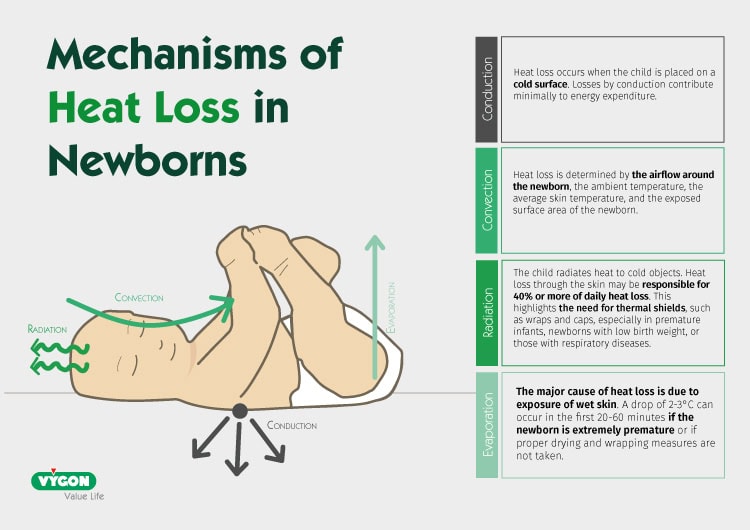


Infographic illustrating the mechanisms of heat loss in newborns—conduction, convection, radiation, and evaporation—explaining how cold surfaces, airflow, exposed skin, and contact with objects contribute to neonatal thermal instability.
Clinical benefits of the LISA method

Clinical benefits of the LISA method

  Understanding the advantages of the LISA method is essential for neonatal professionals seeking evidence‑based strategies to improve respiratory outcomes in preterm infants. This infographic offers a clear, visual breakdown of both early respiratory...

read more
12 Steps of the Golden Hour of Prematurity

12 Steps of the Golden Hour of Prematurity

  This infographic summarizes the 12 essential steps of the Golden Hour of prematurity, outlining the key interventions required to stabilize a preterm newborn during the first 60 minutes of life. It highlights crucial actions such as prenatal counseling, delayed...

read more
Share This