Mechanisms of heat loss in newborns


The infographic clearly illustrates the mechanisms of heat loss in newborn, showing how conduction, convection, radiation, and evaporation impact a premature baby’s ability to maintain thermal stability in the first minutes of life. Understanding these mechanisms is essential for healthcare professionals aiming to prevent hypothermia, one of the most critical risks in neonatal care. Download the full infographic to explore each mechanism in detail and learn how targeted interventions can significantly improve temperature management and clinical outcomes in newborns.
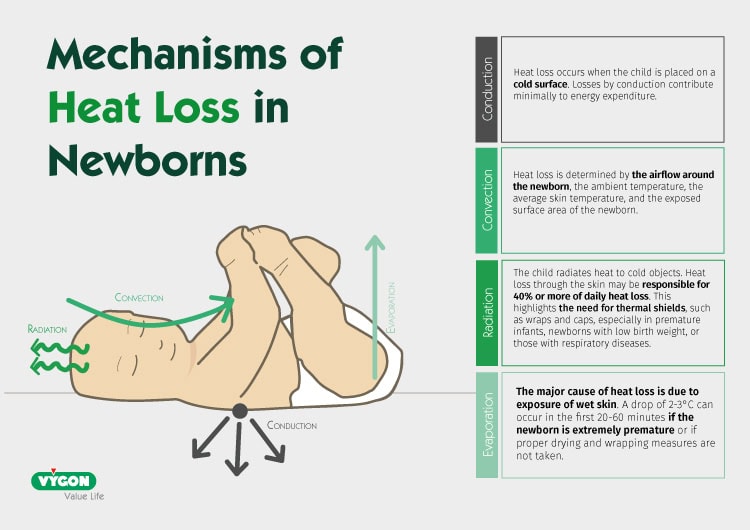


Infographic illustrating the mechanisms of heat loss in newborns—conduction, convection, radiation, and evaporation—explaining how cold surfaces, airflow, exposed skin, and contact with objects contribute to neonatal thermal instability.
Retrograde Tunneling of a Proximal-Cut PICC

Retrograde Tunneling of a Proximal-Cut PICC

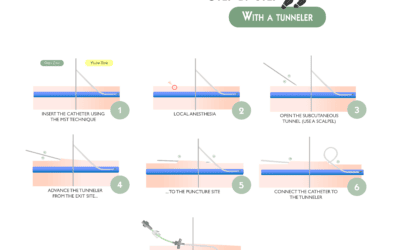
This infographic illustrates the step‑by‑step process of retrograde tunneling for a proximal‑cut PICC, showing how a subcutaneous tunnel is created with a tunneler to reposition the catheter exit site away from the venous puncture for improved stabilization and...

read more
Proximal-Cut PICC Catheter Insertion

Proximal-Cut PICC Catheter Insertion

This infographic provides a step‑by‑step visual guide to Proximal‑Cut PICC catheter insertion. It illustrates the full workflow from ultrasound‑guided venous access and guidewire introduction to catheter advancement, tip position confirmation using ECG‑IC, proximal...

read more
Share This