


Nasal continuous positive airway pressure (CPAP) has become a cornerstone of neonatal respiratory care over the past five decades. Introduced as a non-invasive management strategy, CPAP has significantly contributed to better survival and respiratory outcomes. In the preterm infant, breathing and feeding are closely linked and influence each other in ways that make their clinical management inseparable. Frequently encountered in neonatal units yet often incompletely understood, CPAP Belly Syndrome illustrates how the physiological consequences of respiratory support extend beyond the lungs.
This article aims to provide a comprehensive overview of CPAP Belly Syndrome based on recent literature: its mechanisms, clinical implications, and the current landscape of management.
CPAP in Preterm Infants: An Essential Therapy with Effects Beyond the Lungs
CPAP has transformed neonatal respiratory care by reducing the need for invasive ventilation and improving outcomes in preterm infants. Yet, its effects extend beyond the respiratory system. In these vulnerable patients, breathing and feeding are deeply interconnected, and the positive airway pressure that supports lung function can also influence gastrointestinal physiology.
Nasal CPAP, which delivers continuous positive airway pressure throughout the respiratory cycle, has become an effective form of respiratory support in neonatal units worldwide. It prevents extubation failure, manages apnea of prematurity (2), and serves as an alternative to invasive mechanical ventilation for the treatment of respiratory distress syndrome (1). In extreme preterm infants, early use of CPAP reduces the risk of lung injury and the need for endotracheal intubation, a critical advantage, given that chronic lung disease in this population is strongly associated with prolonged mechanical ventilation (3).
While CPAP is a life-saving intervention and is an essential therapy, it can impact further than the lungs. Beyond its respiratory benefits, Air delivered by CPAP may also enter nearby anatomical structures, including the gastrointestinal tract, which is not yet fully developed in preterm infants.
This anatomical proximity means that every adjustment made to support breathing has the potential to affect feeding, and conversely, every feeding difficulty has the potential to affect breathing. It is precisely at this intersection between respiratory support and digestive immaturity that CPAP Belly Syndrome emerges. Its development is increasingly recognized in neonatal units, and its implications for feeding, nutrition, and overall neonatal outcomes deserve closer attention.
1. What Is CPAP Belly Syndrome?
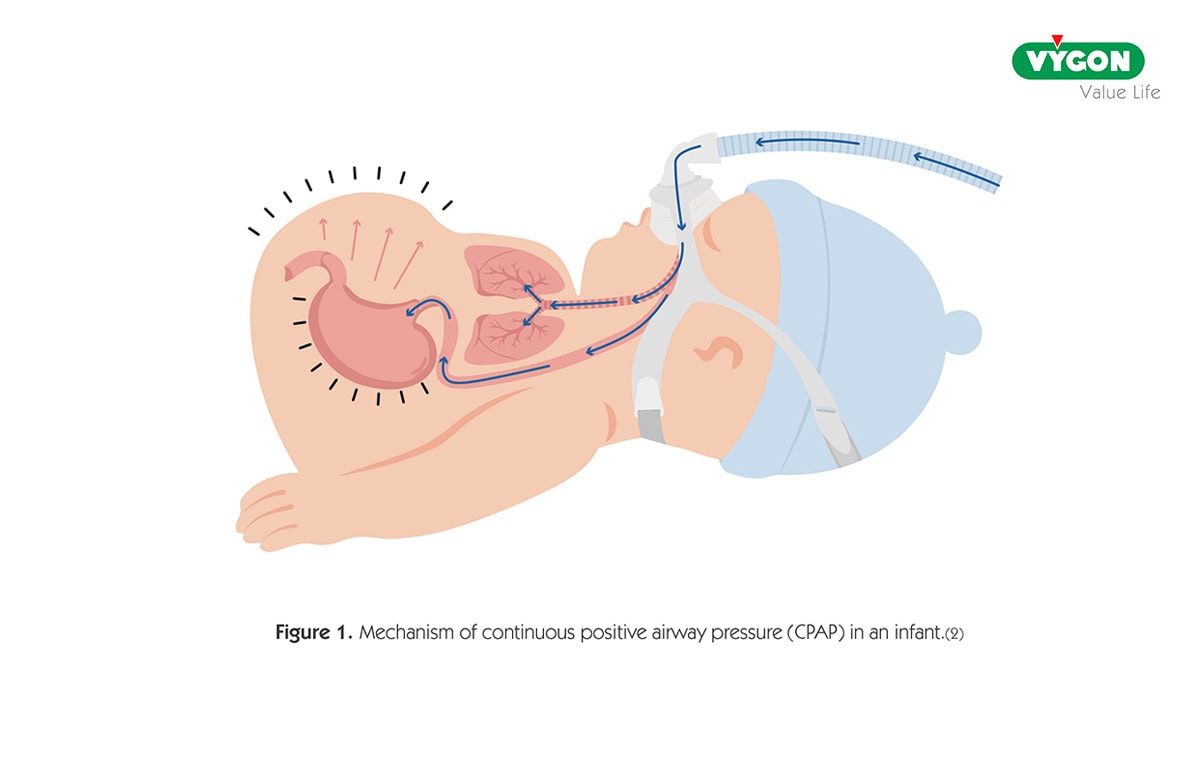
CPAP Belly Syndrome was initially described as abdominal gaseous distension occurring in preterm infants receiving nasal CPAP, typically appearing several days after the start of respiratory support (1). Over time, radiological criteria were incorporated to help differentiate it from other causes of abdominal distension and improve diagnostic accuracy (3). Although generally considered a benign condition, it can be associated with feeding intolerance, gastric residuals, and significant abdominal distension, often requiring closer clinical monitoring (1,3).
But how does CPAP Belly Syndrome develop?
The exact mechanisms behind CPAP Belly Syndrome remain incompletely understood. The most accepted explanation is that the continuous positive pressure delivered by CPAP promotes air swallowing, leading to the accumulation of gas within the gastrointestinal tract and subsequent abdominal distension (2). However, current evidence suggests that the condition is multifactorial, with several contributing factors involved rather than a single clearly established cause (1).
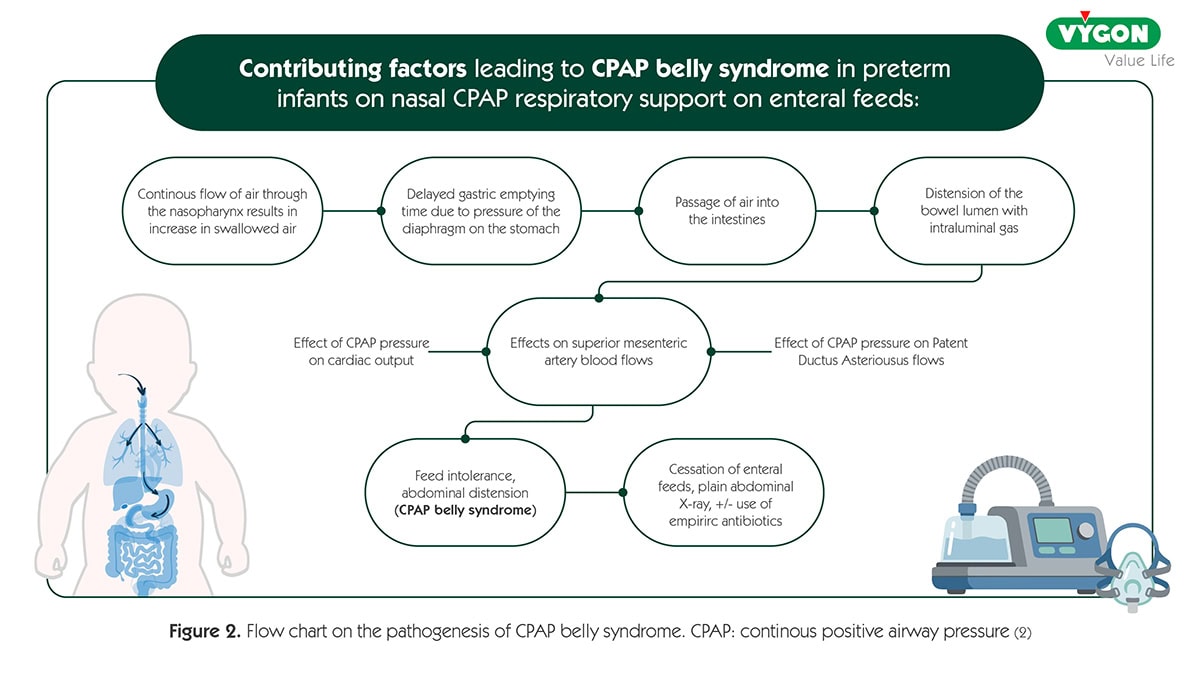
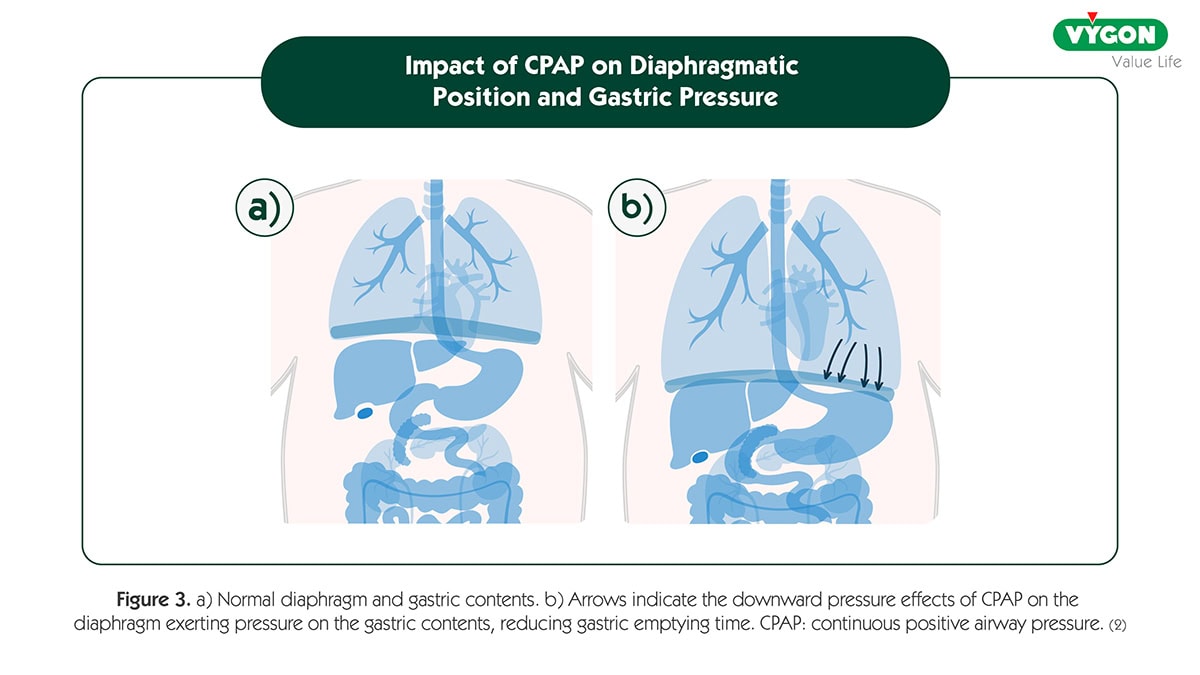
Effects of abdominal pressure on gastric function and digestive immaturity were said to emphasize swallowed air accumulation in the gastrointestinal tract (2), nonetheless, current evidence suggests that impaired intestinal motility is not the primary driver of abdominal distension. Recent studies have found no significant differences in markers of gut function between infants with and without CPAP Belly Syndrome (3).
2. Who Is Most Affected by CPAP Belly Syndrome?
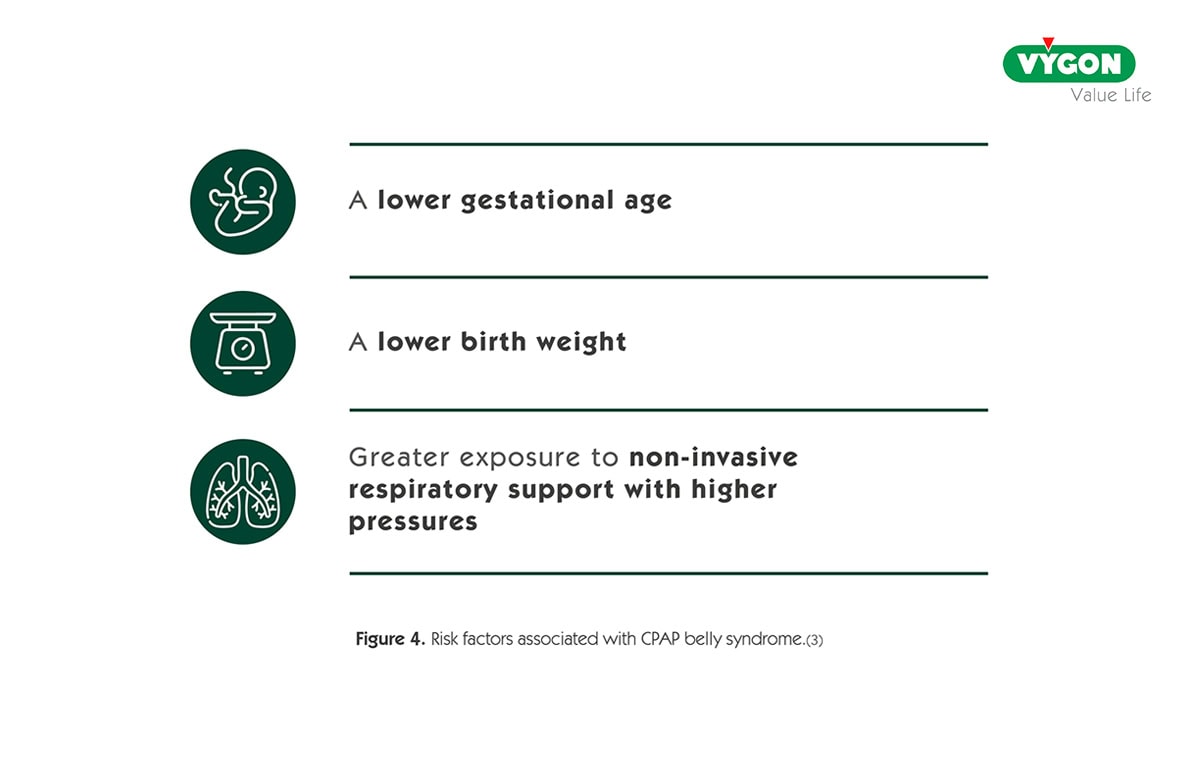
CPAP Belly Syndrome lies at the intersection of respiratory and gastrointestinal immaturity, making preterm infants particularly vulnerable. Understanding this connection is essential for optimizing both feeding and respiratory management in the NICU.
3. How does CPAP Belly Syndrome impact the neonatal development?
Although generally regarded as benign, CPAP Belly Syndrome can have important clinical consequences. By affecting feeding tolerance and delaying enteral nutrition, it may influence growth, gut development, and overall neonatal outcomes, highlighting the close relationship between respiratory support and nutrition in preterm infants.
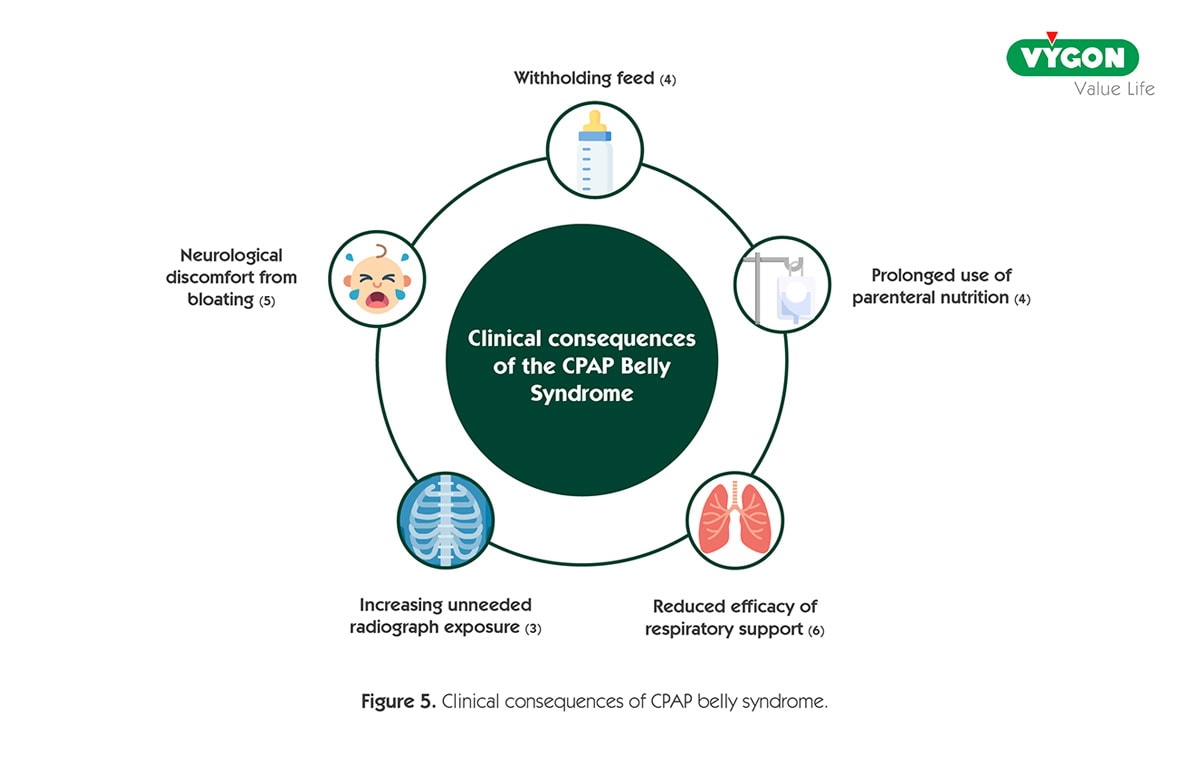
Diagnosis can also be challenging due to the lack of standardized criteria and the presence of symptoms similar to more serious conditions such as necrotizing enterocolitis (NEC). As a result, clinicians often perform additional investigations, initiate antibiotic treatment, or temporarily withhold enteral feeding to exclude life-threatening diagnoses, which may delay recognition and management of CPAP Belly Syndrome (2,3).
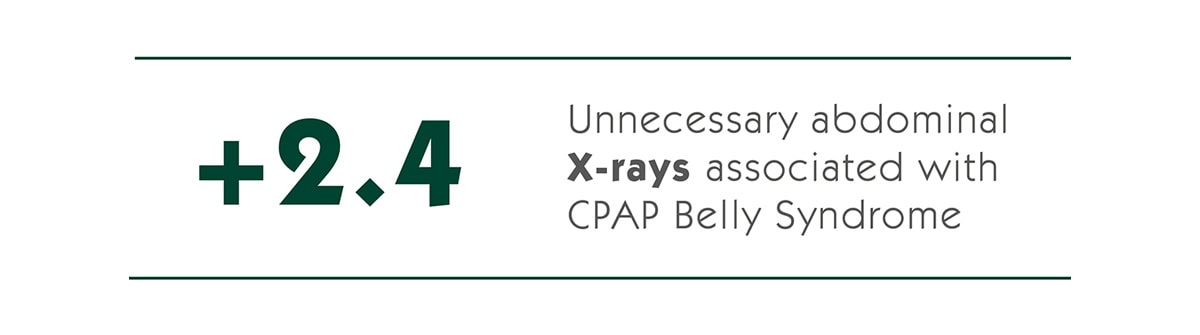
Recent evidence further suggests increased use of radiological monitoring in affected infants, with additional abdominal X-rays that do not lead to changes in clinical management. This underscores the difficulty of distinguishing this particular abdominal distension from other pathological conditions in this vulnerable population (3).
4. How can we Manage CPAP Belly Syndrome?
As Priyadarshi describes in 2020, “CPAP Belly Syndrome in preterm infants is currently an inevitable sequel to the use of CPAP”(2). In clinical practice, several approaches are described in the literature to prevent its development.
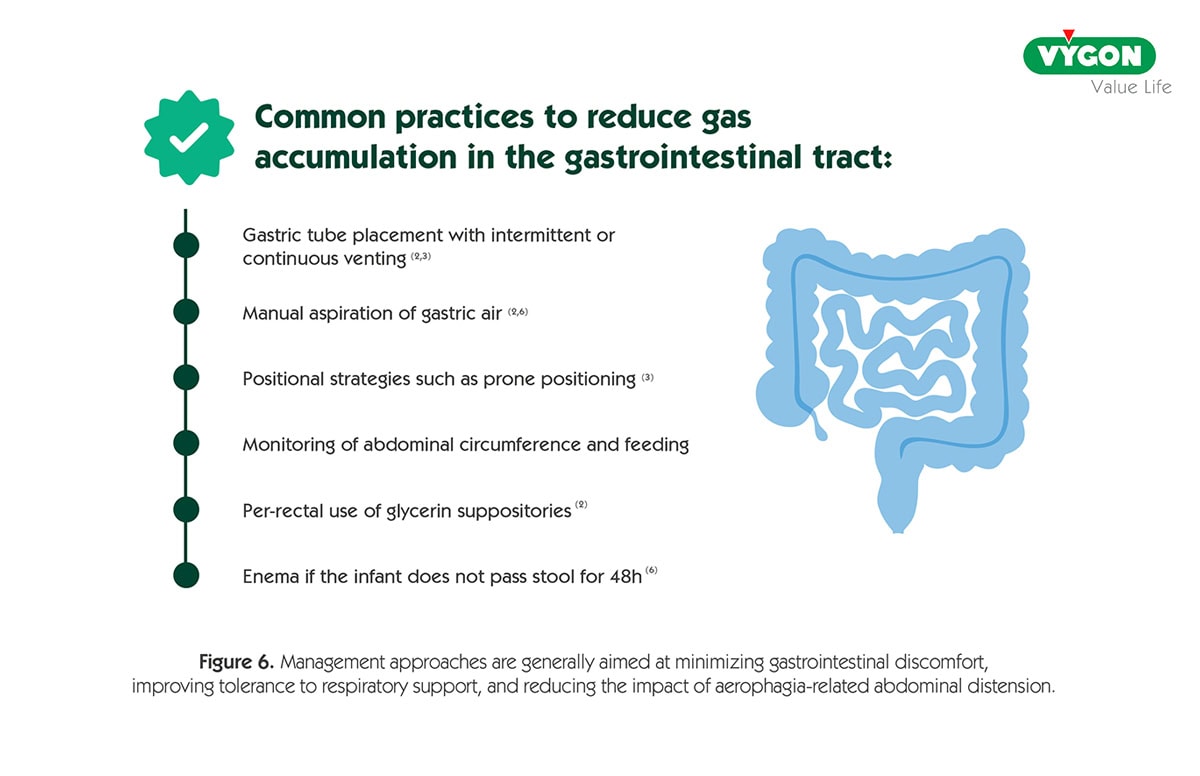
Despite these strategies, abdominal distension remains a common and often difficult-to-control feature of CPAP management in preterm infants, and no definitive evidence or published consensus currently exists to guide optimal practice (2).
Several practical limitations contribute to this challenge:
- Gastric decompression, when performed, is frequently intermittent rather than continuous, which may allow air to reaccumulate between interventions.
- Characteristics of standard feeding tubes (i.e. their small internal diameter) may limit the efficiency of air evacuation.
The result is that, in daily clinical practice, the management of gastric air in preterm infants receiving CPAP remains largely empirical, adapted to local habits and individual clinical judgment rather than defined by standard protocols.
5. So… What is the most effective way to prevent the effects of CPAP Belly Syndrome?
Recent findings suggest that “efforts to ameliorate the effects of CPAP Belly Syndrome should be aimed at removing or preventing the entry of pressurized air from above rather than improving motility or removing air from below” (3).
In practice, to remove air from above often involves the use of oro- or nasogastric feeding tubes to vent accumulated gastric air. However, the efficiency of gastric decompression may depend on several practical factors, including the frequency of venting, the consistency of care practices and the characteristics of the feeding device itself.
The challenge lies in achieving effective decompression while preserving feeding tolerance and minimizing unnecessary disruptions to enteral nutrition, which remains essential for growth and development in preterm infants.
Conclusion
As the use of non-invasive respiratory support continues to expand, CPAP Belly Syndrome is becoming a commonly encountered situation in neonatal units. While often considered benign, it may influence feeding practices, clinical decision-making and resource utilization.
Understanding the mechanisms underlying abdominal distension, as well as the factors influencing its management, is essential for supporting neonatal care teams in their daily practice. In this context, a better recognition of gastric air management as part of routine care may contribute to improving the overall balance between respiratory support and feeding tolerance in preterm infants.
References:
- 1992 – Jaile et al. Benign gaseous distension of the bowel in premature infants treated with nasal continuous airway pressure: A study of contributing factors
- 2020 – Priyadarshi et al. Continuous Positive Airway Pressure Belly Syndrome: Challenges of a Changing Paradigm | Priyadarshi | International Journal of Clinical Pediatrics
- 2024 – Gu et al. Characterizing continuous positive airway pressure (CPAP) Belly Syndrome in preterm infants in the neonatal intensive care unit (NICU) | Journal of Perinatology
- 2003 – De Paoli et al. Nasal CPAP for neonates: what do we know in 2003? Arch Dis Child Fetal Neonatal Ed. 2003
- 2022 – V.E. McGill. Neonatal abdominal support to address CPAP Belly : Two cases report and literature review, Journal of Neonatal-Perinatal Medicine 2022 Neonatal Perinatal Medicine Articles and Resources
- 2004 – Gounaris et al. Gastric emptying in very-low-weight infants treated with nasal continuous positive airway pressure