12 Steps of the Golden Hour of Prematurity


Comprendre les avantages de la méthode LISA est essentiel pour les professionnels en néonatologie qui recherchent des stratégies fondées sur des données probantes afin d’améliorer les résultats respiratoires chez les prématurés. Cette infographie propose une présentation claire et visuelle des bénéfices respiratoires précoces — tels qu’un risque réduit de décès ou de dysplasie bronchopulmonaire (DBP) et une moindre nécessité d’intubation — ainsi que des effets à long terme, notamment une amélioration du développement neurologique et un taux de survie plus élevé sans complications sévères. Si vous souhaitez un aperçu rapide et percutant des raisons pour lesquelles LISA devient l’approche privilégiée dans le monde entier, cette infographie téléchargeable vous apportera les informations clés en un coup d’œil.


This infographic summarizes the 12 essential steps of the Golden Hour of prematurity, outlining the key interventions required to stabilize a preterm newborn during the first 60 minutes of life.
It highlights crucial actions such as prenatal counseling, delayed cord clamping, prevention of hypothermia, safe neonatal transport, respiratory and cardiovascular support, early surfactant administration, infection prevention, nutritional initiation, laboratory analysis, and precise monitoring.
Designed for neonatal professionals, this visual guide provides a clear, structured overview of the most important evidence‑based practices in early preterm care. Download the complete infographic to explore each step in detail and enhance clinical decision‑making during the Golden Hour.
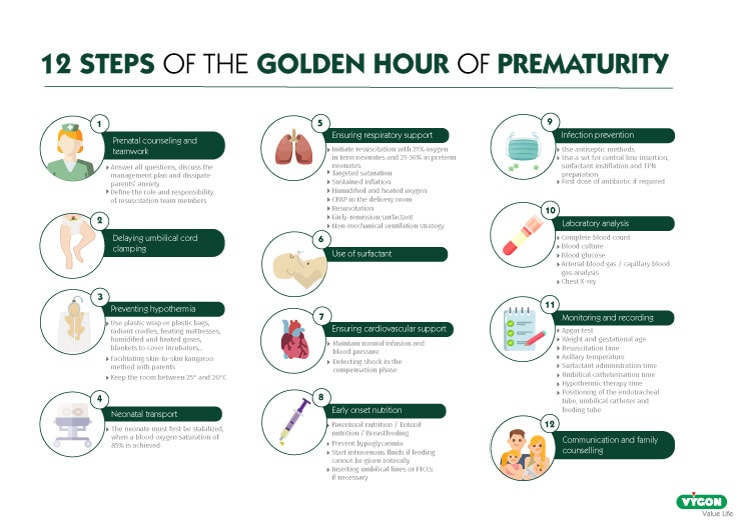
 

Infographic showing the 12 steps of the Golden Hour of Prematurity, including prenatal counseling, delayed cord clamping, hypothermia prevention, neonatal transport, respiratory support, surfactant use, cardiovascular support, early nutrition, infection prevention, laboratory analysis, monitoring, and family communication.
High-risk patients for PDPH in anaesthesia

High-risk patients for PDPH in anaesthesia

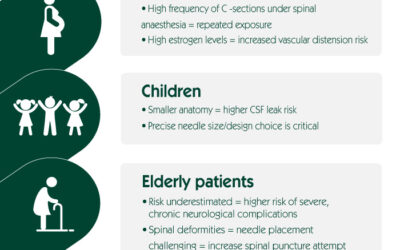
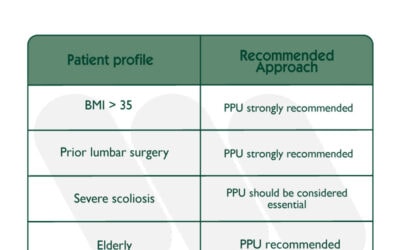
This infographic highlights key patient groups at increased risk of developing Post‑Dural Puncture Headache (PDPH) following spinal anaesthesia, providing a clear and structured overview of clinical considerations. The visual organises four main populations pregnant...

read more
Proximal-Cut PICC Catheter Insertion

Proximal-Cut PICC Catheter Insertion

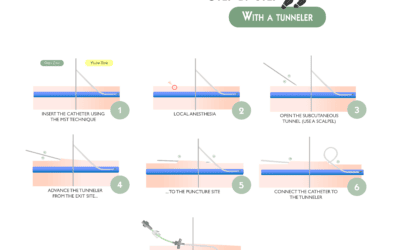
This infographic provides a step‑by‑step visual guide to Proximal‑Cut PICC catheter insertion. It illustrates the full workflow from ultrasound‑guided venous access and guidewire introduction to catheter advancement, tip position confirmation using ECG‑IC, proximal...

read more
Share This