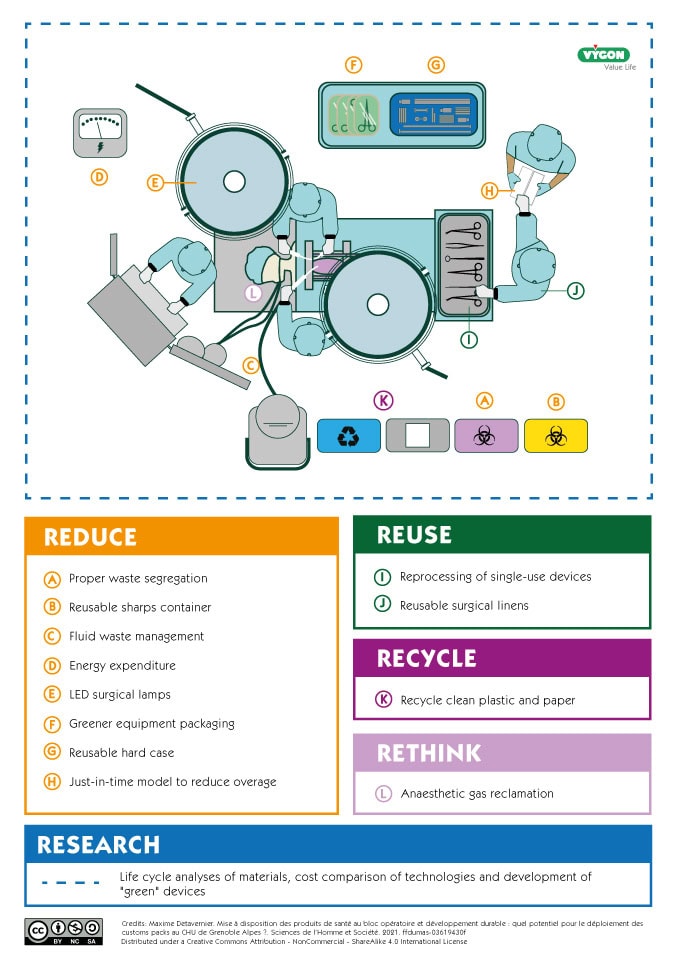
Areas for making the operating room more environmentally


Comprendre les avantages de la méthode LISA est essentiel pour les professionnels en néonatologie qui recherchent des stratégies fondées sur des données probantes afin d’améliorer les résultats respiratoires chez les prématurés. Cette infographie propose une présentation claire et visuelle des bénéfices respiratoires précoces — tels qu’un risque réduit de décès ou de dysplasie bronchopulmonaire (DBP) et une moindre nécessité d’intubation — ainsi que des effets à long terme, notamment une amélioration du développement neurologique et un taux de survie plus élevé sans complications sévères. Si vous souhaitez un aperçu rapide et percutant des raisons pour lesquelles LISA devient l’approche privilégiée dans le monde entier, cette infographie téléchargeable vous apportera les informations clés en un coup d’œil.


Healthcare facilities are under increasing pressure to adopt sustainable practices without compromising patient safety or efficiency. Operating rooms, as high-resource environments, present a unique opportunity for impactful change.

This infographic, “Areas for Making the Operating Room More Environmentally Friendly,” highlights actionable steps such as reducing packaging waste, reusing surgical materials, and recycling clean plastics and paper.

Download it now to explore how your hospital can contribute to a greener future while maintaining clinical excellence.
The costs are not just environmental. This method has a direct impact on clinical efficiency and safety. When materials are gathered separately, the risk of a critical item missing increases significantly, which can lead to wasted time, increased stress in emergency situations and, most importantly, a greater risk to aseptic standards. How can we streamline procedure preparation to make it faster, safer and more environmentally friendly? The answer lies in a simple concept: the custom pack. A custom pack is a unique, sterile package containing all the devices needed for a specific procedure, manufactured on demand to suit the specific needs of a clinical team. A Measurable Impact on Waste Reduction The most immediate and quantifiable benefit of adopting custom packs is the reduction in packaging waste. By consolidating all the necessary components into a single sterile package, custom packs eliminate redundant layers of plastic and cardboard from individual items. A success story is that of Grenoble University Hospital (France). The implementation of 44 different custom packs in 16 surgical specialities resulted in a reduction of 5.89 tonnes of packaging waste in a single year. This figure represents a direct and significant contribution to reducing the operating room's carbon footprint. Gaining time, efficiency and peace of mind In addition to the environmental benefits, custom packs offer significant organizational improvements. Several studies have shown that using a custom pack saves an average of 350 seconds, approximately six minutes per operation. Extrapolated to a hospital's annual surgical volume, this translates into thousands of hours of staff time saved that can be reallocated to direct patient care. This time saved has a direct effect on staff well-being. By optimizing workflows and ensuring that all the necessary equipment is present and correct, custom packs significantly reduce stress, especially in high-pressure emergency situations. The logistical burden on support staff is also alleviated, simplifying inventory management, ordering and storage. This optimized model not only increases efficiency, but also fosters a calmer, more controlled and predictable operating environment for the entire clinical team. Minimizing Risk and Improving Asepsis Any change in the operating room must be judged by its impact on patient safety. In this regard, custom packs offer their most important advantage. By providing a complete, pre-verified set of equipment, they dramatically reduce the risk of human error. This built-in "checklist" function provides an essential layer of safety and standardization. In addition, custom packs improve safety by reducing the risk of aseptic failure. Fewer individual packages mean fewer surfaces to handle, minimizing opportunities for contamination.
High-risk patients for PDPH in anaesthesia

High-risk patients for PDPH in anaesthesia

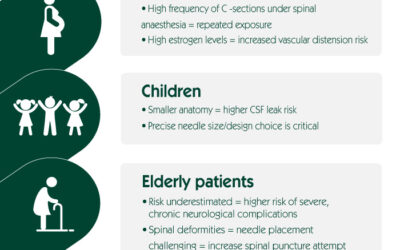
This infographic highlights key patient groups at increased risk of developing Post‑Dural Puncture Headache (PDPH) following spinal anaesthesia, providing a clear and structured overview of clinical considerations. The visual organises four main populations pregnant...

read more
Proximal-Cut PICC Catheter Insertion

Proximal-Cut PICC Catheter Insertion

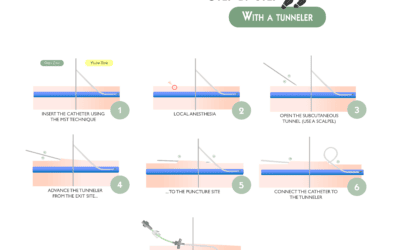
This infographic provides a step‑by‑step visual guide to Proximal‑Cut PICC catheter insertion. It illustrates the full workflow from ultrasound‑guided venous access and guidewire introduction to catheter advancement, tip position confirmation using ECG‑IC, proximal...

read more
Share This