Clinical benefits of the LISA method


Understanding the advantages of the LISA method is essential for neonatal professionals seeking evidence‑based strategies to improve respiratory outcomes in preterm infants. This infographic offers a clear, visual breakdown of both early respiratory benefits—such as lower risk of death or BPD and reduced need for intubation—and long‑term effects including improved neurodevelopment and higher survival without severe complications. If you want a quick, impactful overview of why LISA is becoming the preferred approach worldwide, this downloadable infographic will give you the key insights at a glance.
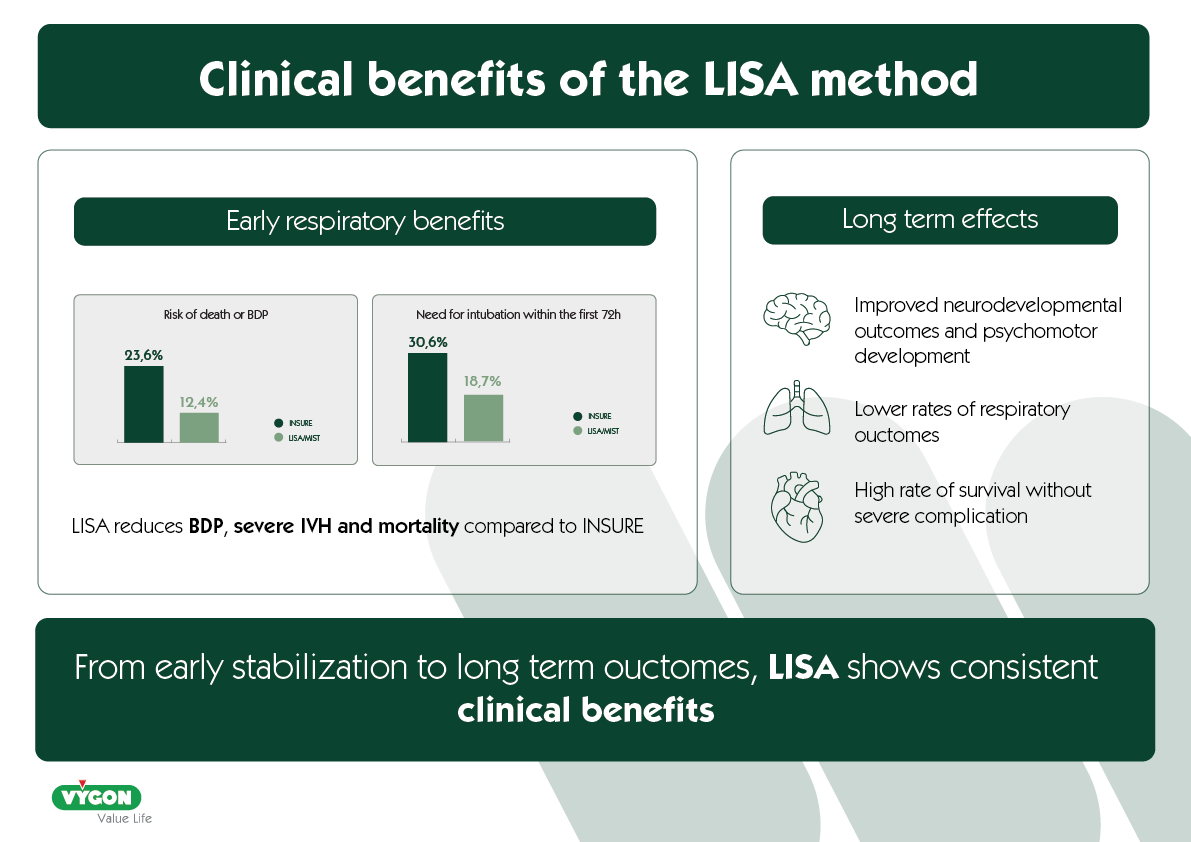


Infographic titled “Clinical benefits of the LISA method,” presenting early respiratory benefits and long‑term effects of the LISA surfactant administration technique. The left section shows early respiratory benefits with two bar charts: one comparing risk of death or BDP (23.6% with INSURE vs 12.4% with LISA) and another comparing need for intubation within the first 72 hours (30.6% with INSURE vs 18.7% with LISA). A note states that LISA reduces BDP, severe IVH and mortality compared to INSURE. The right section highlights long‑term effects, including improved neurodevelopmental and psychomotor outcomes, lower rates of respiratory outcomes, and high survival without severe complications. A footer emphasizes that from early stabilization to long‑term outcomes, LISA shows consistent clinical benefits.
Retrograde Tunneling of a Proximal-Cut PICC

Retrograde Tunneling of a Proximal-Cut PICC

This infographic illustrates the step‑by‑step process of retrograde tunneling for a proximal‑cut PICC, showing how a subcutaneous tunnel is created with a tunneler to reposition the catheter exit site away from the venous puncture for improved stabilization and...

read more
Proximal-Cut PICC Catheter Insertion

Proximal-Cut PICC Catheter Insertion

This infographic provides a step‑by‑step visual guide to Proximal‑Cut PICC catheter insertion. It illustrates the full workflow from ultrasound‑guided venous access and guidewire introduction to catheter advancement, tip position confirmation using ECG‑IC, proximal...

read more
Share This