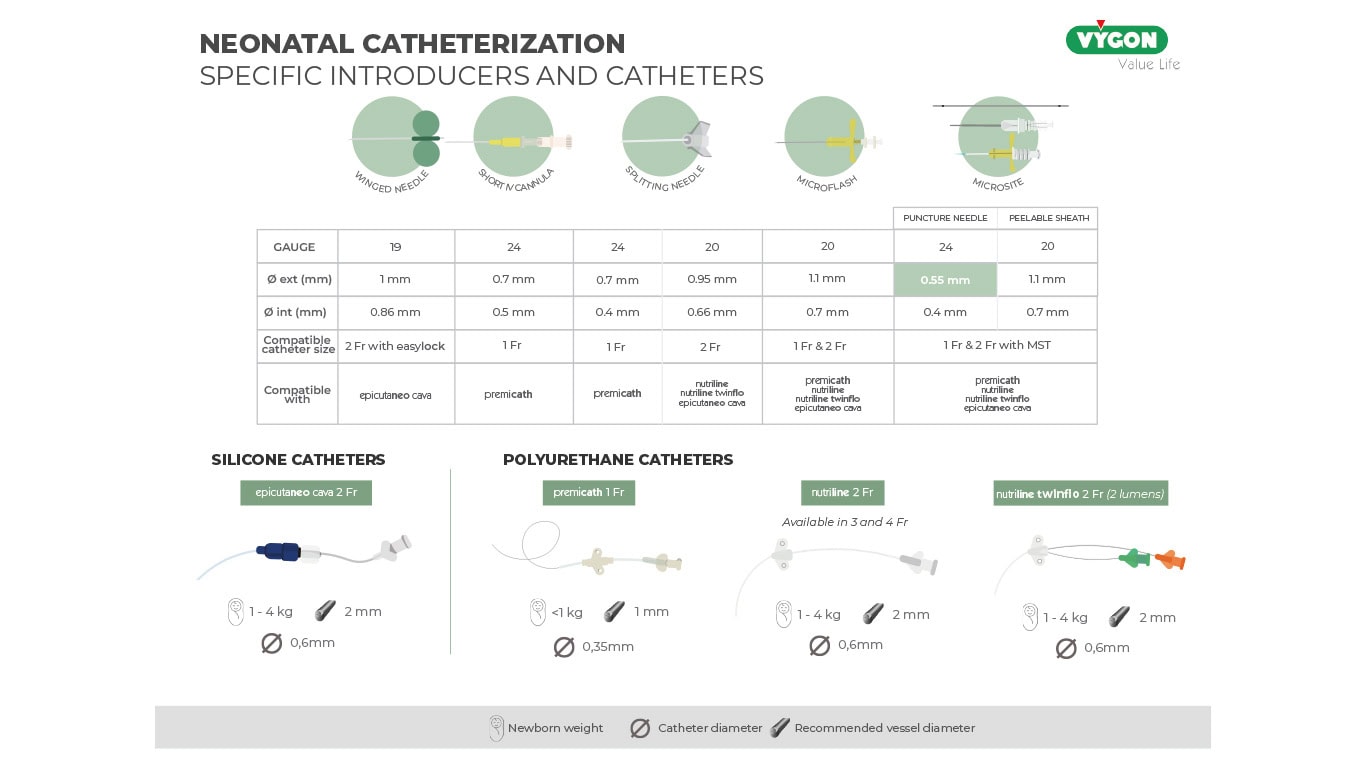
Introducers and specific catheters for neonatal cannulation


Comprendre les avantages de la méthode LISA est essentiel pour les professionnels en néonatologie qui recherchent des stratégies fondées sur des données probantes afin d’améliorer les résultats respiratoires chez les prématurés. Cette infographie propose une présentation claire et visuelle des bénéfices respiratoires précoces — tels qu’un risque réduit de décès ou de dysplasie bronchopulmonaire (DBP) et une moindre nécessité d’intubation — ainsi que des effets à long terme, notamment une amélioration du développement neurologique et un taux de survie plus élevé sans complications sévères. Si vous souhaitez un aperçu rapide et percutant des raisons pour lesquelles LISA devient l’approche privilégiée dans le monde entier, cette infographie téléchargeable vous apportera les informations clés en un coup d’œil.


Ensuring safe vascular access in neonates requires precision and the correct choice of devices to reduce the risk of infection and complications. This infographic provides a comprehensive technical overview of introducers and specific catheters for neonatal cannulation, offering a vital reference for NICU professionals.

The visual guide details the compatibility between puncture needles—such as splitting needles and short IV cannulas—and specific catheters like premicath and epicutaneo cava. It highlights the clinical benefits of the Modified Seldinger Technique (MST) using microsite introducers to improve first-attempt success rates. Furthermore, it outlines critical safety parameters, including the ideal 33% vein-to-catheter ratio, to ensure optimal flow and preserve the delicate neonatal venous capital.
[Download the full Infographic PDF here]

The image displays a compatibility table for needle gauges (19G to 24G) and their use with silicone and polyurethane neonatal PICC lines (Epicutaneo Cava, Premicath, Nutriline). It includes illustrations of needle types (Winged, Splitting, Short IV) , visual recommendations on the vein-to-catheter ratio (ideal 33%) , use of the Modified Seldinger Technique (MST) , and sutureless fixation guidelines using tissue glue for patients weighing 1-4 kg.
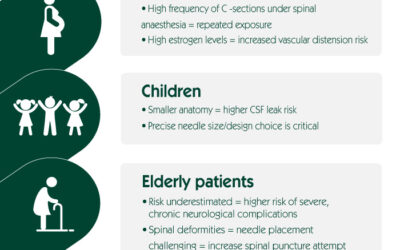
High-risk patients for PDPH in anaesthesia

High-risk patients for PDPH in anaesthesia

This infographic highlights key patient groups at increased risk of developing Post‑Dural Puncture Headache (PDPH) following spinal anaesthesia, providing a clear and structured overview of clinical considerations. The visual organises four main populations pregnant...

read more
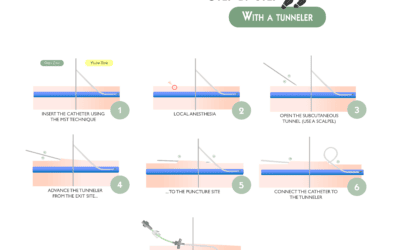
Proximal-Cut PICC Catheter Insertion

Proximal-Cut PICC Catheter Insertion

This infographic provides a step‑by‑step visual guide to Proximal‑Cut PICC catheter insertion. It illustrates the full workflow from ultrasound‑guided venous access and guidewire introduction to catheter advancement, tip position confirmation using ECG‑IC, proximal...

read more
Share This