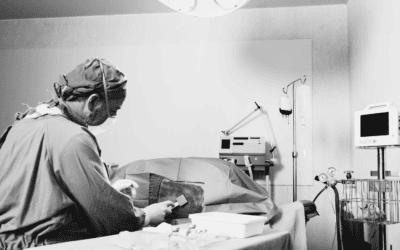

Rapid haemodynamic instability remains a defining challenge in critical care. Whether driven by massive haemorrhage, septic shock or major surgery, the ability to deliver large volumes of fluid and blood products quickly, safely and reliably is central to patient survival.
The Clinical Need for High‑Flow Central Venous Access
Traditional standard‑bore central venous catheters may be insufficient during periods of rapid circulatory compromise. In scenarios such as trauma‑associated haemorrhage, liver transplantation or major vascular surgery, delays in volume replacement are associated with worsened outcomes, including prolonged shock and increased mortality. ¹
High‑flow central venous catheters are specifically designed to address this gap. By combining large internal lumen diameters with high‑performance polyurethane materials, these catheters enable rapid infusion of fluids, blood and blood products at flow rates approaching those of peripheral large‑bore access, while maintaining the advantages of central positioning. ²
Certain high‑flow central venous catheter designs are capable of delivering flow rates approaching 400 mL/min, influenced by catheter geometry, infusion pressure and fluid characteristics. These performance gains are explained by Poiseuille’s law, in which flow is proportional to the fourth power of the radius and inversely proportional to catheter length.³
Key clinical advantages include:
- Support for rapid volume replacement during active haemorrhage
- Efficient transfusion of blood products without additional large‑bore access
- Reduced need for multiple peripheral cannulae in unstable patients
Importantly, high‑flow catheters allow these infusion rates while remaining compatible with standard central venous access techniques and monitoring.
Multi‑Lumen Catheters: Managing Therapeutic Complexity
Modern critical care increasingly involves simultaneous therapies that are incompatible, require dedicated lumens or demand uninterrupted delivery. Five‑lumen central venous catheters are designed to meet these demands by providing multiple, fully separated lumens, each with dedicated flow characteristics.
Clinical scenarios where five‑lumen access may be advantageous include:
- Concurrent vasoactive infusions, sedation and antibiotics
- Rapid fluid or blood administration alongside continuous drug delivery
- Central venous pressure monitoring and frequent blood sampling
By consolidating access into a single device, five‑lumen catheters may reduce the need for additional lines, decreasing mechanical complication risk and simplifying line management in time‑critical situations. ⁴
Infection Risk and Mitigation Strategies
The relationship between catheter lumen number and infection risk is well described in the literature. Systematic reviews have demonstrated higher rates of catheter‑related bloodstream infection (CRBSI) with multi‑lumen devices compared with single‑lumen catheters, particularly with prolonged dwell times. ⁵, ⁶
However, contemporary evidence indicates that infection risk is multifactorial and strongly influenced by:
- Insertion technique and operator experience
- Use of ultrasound guidance
- Adherence to maximal barrier precautions
- Catheter maintenance and early removal when no longer indicated
Meta‑analyses show that ultrasound‑guided placement and robust care bundles significantly reduce infection rates, even with use of multi-lumen catheters. ⁷ This has shifted clinical guidance away from rigid lumen limits towards context‑driven catheter selection, using the minimum number of lumens necessary for the expected therapy.
Impact on Critical Care Practice
The combined use of high‑flow and multi‑lumen catheters reflects a broader shift towards anticipatory vascular access planning. Rather than escalating access reactively, clinicians can select devices capable of supporting both immediate resuscitation and evolving treatment needs.
This approach offers several potential benefits:
- Faster haemodynamic stabilisation
- Reduced line manipulation during active resuscitation
- Improved organisation of complex infusion regimens
- Fewer emergent line insertions under suboptimal conditions
Crucially, these advantages depend on ongoing reassessment, with prompt de‑escalation of catheter complexity as patient status improves.
Conclusion
High‑flow and five‑lumen central venous catheters represent an important evolution in critical care vascular access. By enabling rapid volume replacement while supporting the concurrent delivery of complex therapies, these devices align with the realities of modern intensive care.
Their effective use relies on careful patient selection, rigorous insertion and maintenance standards, and a commitment to reviewing catheter necessity throughout the patient journey. When integrated into evidence‑based practice, multi‑lumen high-flow catheters can meaningfully support timely, safe and organised critical care delivery.
References
- Cannon JW. Hemorrhagic shock. N Engl J Med. 2018;378:370–9.
- Maegele M, et al. Coagulopathy and transfusion therapy in trauma patients. Thromb Haemost. 2017;117:190–203.
- Poiseuille J. Recherches expérimentales sur le mouvement des liquides. Comptes Rendus. 1840;11:961–7.
- Kolikof J, et al. Central venous catheter selection in critically ill patients. StatPearls. 2023.
- Zürcher M, et al. Colonization and bloodstream infection with single‑ versus multi‑lumen central venous catheters. Anesth Analg. 2004;99:177–82.
- Lafuente Cabrero E, et al. Risk factors of catheter‑associated bloodstream infection. PLoS One. 2023;18:e0282290.
- Boulet N, et al. Ultrasound guidance and catheter‑related infection: a systematic review and meta‑analysis. Crit Care. 2024;28:378.

A place to learn about health procedures and techniques from leading professionals.