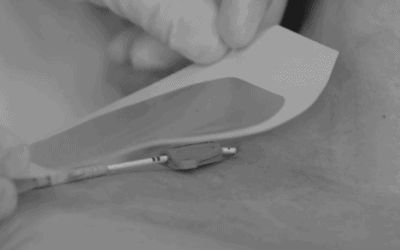
Infection Risk, Standardisation and Sustainability In Critical Care Practice Arterial catheters (ACs) are routinely used in critical care for invasive blood pressure monitoring and frequent blood sampling. Despite their widespread use, arterial lines are often...
haemodynamic monitoring
The Risks Associated with Traditional CVC Securement: How SASS Devices Support Risk Mitigation Strategies
Central venous catheters are critical to patient care across acute, paediatric, neonatal and oncology settings. However, despite careful insertion and maintenance protocols, complications related to catheter securement remain a persistent risk. Suboptimal securement...
Data to Decisions in Cardiac Output Monitoring: Why Ease of Use Matters
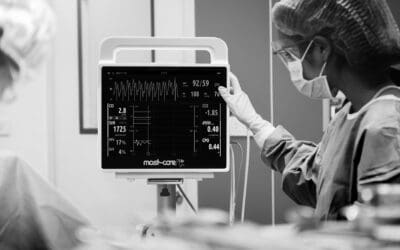
Accurate haemodynamic monitoring is central to safe care in operating theatres, emergency settings, and critical care environments. Cardiac output (CO) monitoring provides essential insight into a patient’s circulatory status, supporting early recognition of...
Advanced Haemodynamic Monitoring: Why Ease of Use Drives Adoption
Why Ease of Use Matters For anaesthesiologists, intensivists, and critical care nurses, time and cognitive bandwidth are limited resources. While traditional vital signs can be slow or nonspecific during early instability, continuous haemodynamic...
Advanced Haemodynamic Monitoring and Cardiac Output Assessment in Paediatric Patients
By Prof. Ehrenfried SCHINDLER PRAM and MostCare are trademarks of Bio-Si International s.r.l. Haemodynamic monitoring is essential in paediatric peri-operative and critical care medicine, guiding adequate tissue perfusion and oxygen delivery in the most...
Vasopressor use after non-cardiac surgery: an international observational study
Post-operative hypotension is a common and clinically significant challenge, often linked to poor outcomes such as organ dysfunction, prolonged recovery, and increased mortality. Vasopressors are routinely used to manage this condition. Until recently, their use in...
Simulation in Haemodynamic Monitoring and Management
Haemodynamic monitoring and management are fundamental components of perioperative care. Accurate measurement and interpretation of advanced haemodynamic variables can guide clinical decisions and therapeutic interventions, ultimately enhancing patient...
Sepsis Identification and Management for Healthcare Professionals
Early identification of sepsis is critical for patient survival, yet it remains a significant challenge[1]. Nurses play a vital role in this process by routinely monitoring patients for signs of sepsis. This article highlights key aspects of identification and...
Going Green in Perioperative Haemodynamic Monitoring: A Sustainable Shift in Clinical Practice
Healthcare faces mounting challenges from climate change and rising operational costs. A significant portion of its carbon footprint stems from plastic waste, and the energy demands of departments such as operating theatres and intensive care units. To mitigate this,...
Cardiac Cycle Efficiency: Beyond Measurement, Toward Clinical Interpretation
Advanced Haemodynamic monitoring, particularly the ability to track stroke volume (SV) and cardiac output (CO), has significantly contributed to the refinement of anaesthesiologists’ expertise in Haemodynamic management. Beyond serving as cardiac output monitors,...
Cardiac Output Monitoring in Paediatric Intensive Care: Supporting Informed Decisions
Sepsis remains a critical threat to children, with septic shock frequently requiring admission to Paediatric Intensive Care Units (PICUs).1 Early and appropriate fluid resuscitation is paramount for improving outcomes and reducing mortality in these vulnerable...
Perioperative haemodynamic management made easy, affordable, and green
Haemodynamic instability frequently manifests during the perioperative course of high-risk surgical patients. This instability arises primarily during surgery due to the influence of anaesthetic agents on vascular tone, compounded by surgical bleeding....
Subscribe to our newsletter
Keep up to date with all the latest from Campus Vygon UK, by subscribing to our quarterly e-newsletter.
For all the latest in clinical education and articles, infographics, resources, online learning and international webinars and events.