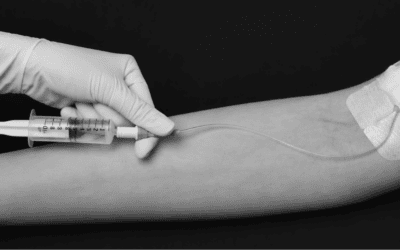

The Seldinger technique remains one of the most significant innovations in vascular access, providing the foundation for safe, reliable and minimally invasive catheter placement across a wide range of clinical applications.
From central venous catheterisation to PICC and midline insertion, this technique underpins many of the procedures performed daily in healthcare settings worldwide. Understanding its background, evolution and practical approaches is essential for clinicians involved in vascular access.
Origins of the Seldinger Technique
The Seldinger technique was developed in 1953 by Swedish radiologist Dr Sven-Ivar Seldinger. At the time, gaining access to blood vessels for imaging or therapeutic purposes often required invasive surgical techniques, increasing both risk and patient discomfort.
Dr Seldinger introduced a method that allowed safe entry into a vessel using a needle, guidewire and catheter sequence, significantly reducing trauma and improving procedural efficiency. His approach quickly became the standard for vascular access and remains in widespread use today.
The Principle of the Technique
At its core, the Seldinger technique follows a simple but highly effective sequence:
- Vessel puncture using a needle
- Insertion of a guidewire through the needle
- Removal of the needle, leaving the guidewire in place
- Advancement of a catheter or introducer over the guidewire
- Removal of the guidewire, leaving the device securely positioned
This controlled, stepwise approach enables accurate placement while minimising vessel trauma and reducing the risk of complications.
Why the Seldinger Technique Was Developed
The original aim of the Seldinger technique was to improve both safety and accessibility in vascular procedures.
Prior to its introduction:
- Procedures were more invasive
- Vessel access was less precise
- Complication rates were higher
The Seldinger method addressed these challenges by providing a structured, reproducible approach, making vascular access safer for patients and more manageable for clinicians.
Benefits of the Seldinger Technique
Over time, the Seldinger technique has become widely adopted due to its numerous clinical advantages:
Minimally invasive approach
The technique reduces the need for surgical cut-down procedures, helping to:
- Minimise tissue damage
- Reduce pain and recovery time
- Lower infection risk
Improved placement accuracy
The use of a guidewire allows for more controlled catheter advancement, supporting:
- Precise placement
- Reduced risk of misplacement
- Greater procedural confidence
Versatility across applications
The technique is used across a range of vascular access procedures, including:
- Central venous catheter (CVC) placement
- Peripherally inserted central catheter (PICC) insertion
- Midline placement
- Interventional radiology procedures
Standardisation of practice
Its step-by-step approach supports:
- Consistent technique across clinicians
- Easier training and competency development
- Alignment with best practice guidelines
Approaches to the Seldinger Technique
While the core principles remain consistent, the Seldinger technique can be applied using different approaches depending on clinical need.
Traditional (classic) Seldinger technique
This follows the original sequence and is commonly used for:
- Central venous access
- Interventional procedures
It requires careful control during each step and is often performed using ultrasound guidance in modern practice.
Modified Seldinger technique
The modified approach introduces additional components, typically:
- A peel-away sheath or dilator
- A catheter pre-loaded onto the system
This approach is widely used in:
- PICC insertion
- Midline placement
The modified technique can:
- Simplify the procedure
- Reduce the number of steps
- Improve ease of use, particularly in bedside insertions
Clinical Impact and Who It Helps
The Seldinger technique has had a significant impact on both patients and clinicians.
For patients
- Fewer invasive procedures
- Reduced complication rates
- Improved comfort and recovery
- More reliable long-term vascular access
For clinicians
- Greater procedural control and confidence
- A structured, reproducible technique
- Improved success rates
- Support for training and skill development
Why It Remains Essential in Modern Practice
Despite advances in technology and device design, the Seldinger technique remains central to vascular access because it provides a safe, adaptable and evidence-based foundation.
Modern innovations such as ultrasound guidance, advanced catheter materials and integrated insertion systems have enhanced its application, but the core principles remain unchanged.
Its continued relevance lies in its ability to:
- Adapt to new devices and techniques
- Support a wide range of clinical scenarios
- Deliver consistent, safe outcomes
Summary
The Seldinger technique transformed vascular access by introducing a safer, more controlled and minimally invasive method of catheter placement.
Today, it continues to underpin best practice across healthcare, supporting clinicians in delivering reliable vascular access while improving patient safety and experience.
By understanding both its background and approaches, clinicians can better appreciate its role in modern practice and continue to apply it effectively across a range of clinical settings.

A place to learn about health procedures and techniques from leading professionals.