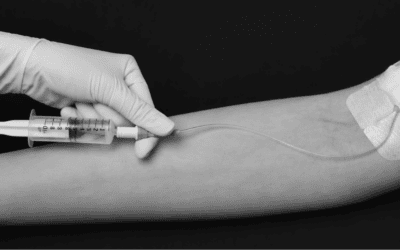

Peripherally inserted central catheters (PICCs) are a well-established method of providing medium to long-term vascular access. While device design plays an important role, successful outcomes are closely linked to insertion technique, vessel preservation and procedural consistency.
As clinical pathways become more complex, there is increasing focus on approaches that not only support reliable access, but also enhance control during insertion, reduce vessel trauma and improve overall procedural efficiency.
This article examines these considerations, aligning device design with the practical needs of clinicians performing PICC insertion at the bedside or in acute settings.
Supporting the Fundamentals of PICC Insertion
Effective PICC placement relies on a number of key procedural principles:
- Precise venepuncture and vessel selection
- Controlled advancement of the catheter
- Minimisation of endothelial trauma
- Maintenance of aseptic technique
Small variations in technique can have a significant impact on outcomes, influencing complication rates such as phlebitis, thrombosis or catheter dysfunction.
Devices that support greater control and predictability during insertion can therefore play an important role in reinforcing best practice.
The Role of Proximal Cutting in Insertion Technique
A defining design feature of some PICC lines isproximal cutting capability, which has been developed to support a more controlled and adaptable insertion process.
Proximal cutting allows the catheter to be trimmed from the proximal end, rather than the distal tip. This has several important procedural implications:
- Preserves the integrity of the distal catheter tip, helping maintain optimal tip design and performance
- Supports more accurate catheter length adjustment, aligned to individual patient anatomy
- Reduces the risk of compromising flow dynamics or catheter function
- Allows clinicians to adapt the catheter length without affecting the portion that will reside within the vessel
- Minimises the risk of thrombosis and is less traumatic for the vein
In practice, this contributes to greater precision during placement and supports safer catheter positioning.
Enhancing Control and Consistency
Consistency in PICC insertion is a key factor in reducing complications and improving patient outcomes. By supporting a standardised, repeatable approach, clinicians can reduce variability between operators and across care settings.
Design elements that simplify handling and support a controlled insertion process can:
- Improve clinician confidence
- Reduce procedural complexity
- Support training and skill development
- Enhance first-attempt success rates
This is particularly important in busy clinical environments, where multiple practitioners may be involved in vascular access procedures.
Aligning with Modern Vascular Access Practice
Modern PICC insertion is increasingly supported by:
- Ultrasound-guided venepuncture
- Structured insertion pathways
- Standardised care bundles
Alongside these developments, device design has evolved to better support the technical aspects of insertion, rather than simply focusing on device performance alone.
When PICC lines reflects this shift, combining features that support both clinical performance and procedural technique, including its compatibility with contrast-enhanced imaging when required, you can ensure you are aligning with best practice recommendations.
Reducing Trauma and Supporting Vessel Preservation
Minimising trauma during insertion is essential for preserving vessel health, particularly in patients requiring long-term or repeated vascular access.
Improved control during catheter placement can help to:
- Reduce endothelial damage
- Lower the risk of thrombosis and inflammation
- Support longer device dwell times
- Preserve future access options
By supporting more precise insertion and reducing unnecessary manipulation, clinicians can help protect the vessel and improve long-term outcomes.
Supporting Patient-Centred Care
From the patient perspective, an effective insertion technique plays a key role in improving the overall experience, helping to reduce discomfort during placement, minimise the need for repeated insertion attempts, and lower the risk of complications. These factors contribute to a more reliable and reassuring treatment pathway. Where devices are designed to support multiple clinical needs, such as both therapy delivery and imaging access, the benefits can be extended further by reducing the need for additional procedures, ultimately enhancing patient comfort and streamlining care.
Conclusion
While PICCs are widely used across clinical practice, the importance of insertion technique, procedural control and consistency should not be underestimated.
As vascular access practice continues to evolve, aligning device design with clinical technique will remain central to delivering safe, effective and patient-focused care.

A place to learn about health procedures and techniques from leading professionals.