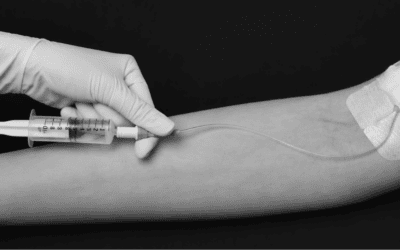

Vascular access devices (VADs) are a cornerstone of modern healthcare, supporting the delivery of intravenous therapies across acute, community, and outpatient settings. From peripheral cannulas to central venous catheters, these devices vary significantly in design, dwell time, and risk profile. Understanding how VADs are classified as medical devices is essential, as classification underpins regulatory oversight, clinical governance, and patient safety.
Why Medical Device Classification Matters
Medical device classification is a risk-based system used by regulators to determine the level of scrutiny applied to a device before and after it is placed on the market. In the UK, classification affects:
- The conformity assessment route
- Whether an Approved Body is required
- The level of clinical evidence and post-market surveillance needed.
Correct classification helps ensure that devices are safe, effective, and appropriate for their intended clinical use. Misclassification can lead to regulatory delays, inappropriate use, or increased risk to patients. (1)
Regulatory Framework in the UK and EU
In the UK, medical devices are regulated under the UK Medical Devices Regulations 2002 (as amended) and overseen by the Medicines and Healthcare products Regulatory Agency (MHRA). In the European Union, classification is governed by the EU Medical Device Regulation (EU MDR 2017/745), which came fully into application in May 2021 and introduced more stringent classification and evidence requirements. (2)
Both frameworks classify medical devices into four risk-based categories:
- Class I – Low risk
- Class IIa – Moderate risk
- Class IIb – Medium to high risk
- Class III – Highest risk
The higher the class, the greater the regulatory control.
How Vascular Access Devices Are Classified
VAD classification is influenced by several factors, including:
- Degree of invasiveness
- Duration of use (transient, short term, or long term)
- Whether the device is implantable
- The anatomical location of placement
Under EU MDR Annex VIII and UK equivalence rules, many vascular access devices fall into Class IIa, IIb, or III, depending on their characteristics. (3)
Examples include:
- Peripheral intravenous catheters: Typically, Class IIa, reflecting short term invasive use
- Midlines and PICCs: Often Class IIa or IIb, depending on intended dwell time and venous placement
- Central venous catheters (CVCs): Frequently Class IIb, reflecting the increased risk associated with access to the central circulation
- Implantable ports: Generally, Class III due to long term implantation and higher potential patient risk
These classifications are consistent with guidance discussed in clinical literature focused on vascular access devices. (4)
The Clinical Relevance of Classification
While classification is a regulatory process, it has practical implications for clinicians. Devices in higher risk classes are subject to more robust design controls, clinical evaluation, and post-market monitoring. This added scrutiny helps ensure that devices used in more complex or high-risk vascular access scenarios meet appropriate safety standards.
Understanding classification also supports informed device selection, reinforces adherence to intended use, and contributes to safer clinical practice, particularly in environments where multiple VAD options are available.
Supporting Safer Practice Through Education
Medical device classification is not static. Regulatory frameworks continue to evolve, with updates such as the MDCG 2021 24 guidance refining how classification rules are applied under EU MDR. Ongoing education therefore plays a vital role in ensuring both manufacturers and clinicians remain aligned with best practice. (5)
By understanding how and why vascular access devices are classified, healthcare professionals can better appreciate the evidence, governance, and controls that support safe and effective intravascular therapy.
References
1. Medicines and Healthcare products Regulatory Agency (MHRA). (2026). Regulating medical devices in the UK. GOV.UK. Available at: https://www.gov.uk/guidance/regulating-medical-devices-in-the-uk
2. European Parliament and Council. (2017). Regulation (EU) 2017/745 on medical devices (EU MDR). Official Journal of the European Union. Available at: https://eur-lex.europa.eu/eli/reg/2017/745/oj/eng
3. Medical Device Coordination Group (MDCG). (2026). MDCG 2021 24 Rev.1: Guidance on classification of medical devices. European Commission. Available at: https://health.ec.europa.eu/system/files/2021-10/mdcg_2021-24_en_0.pdf
4. MedDeviceGuide. (2026). EU MDR classification rules (Annex VIII): Complete guide. Available at: https://meddeviceguide.com/blog/eu-mdr-classification-rules-annex-viii-guide
5. Kelly, L.J. & Jones, T. (2018). Medical device classification: focus on vascular access. British Journal of Nursing, 27(14), S14–S19. Available at: https://pubmed.ncbi.nlm.nih.gov/30048177/

A place to learn about health procedures and techniques from leading professionals.