Infographic: Environmental Impact of Anaesthesia in Lumbar Fusion Surgeries

Understanding the Environmental Impact of Anesthesia in Lumbar Fusion Surgeries

As sustainability becomes a growing concern in healthcare, it’s crucial to evaluate the environmental footprint of medical procedures. This infographic highlights the carbon emissions associated with anesthetic agents used in single-level transforaminal lumbar interbody fusion (TLIF) surgeries. By comparing spinal anesthesia and general anesthesia, the visual data translates emissions into miles driven by a passenger car—making the impact easier to grasp.

Based on calculations from the U.S. Environmental Protection Agency’s Greenhouse Gases Equivalencies Calculator, this resource offers valuable insights for clinicians, hospital administrators, and sustainability advocates aiming to reduce the carbon footprint of surgical practices.

Download the full infographic below to explore the data and support greener healthcare decisions.
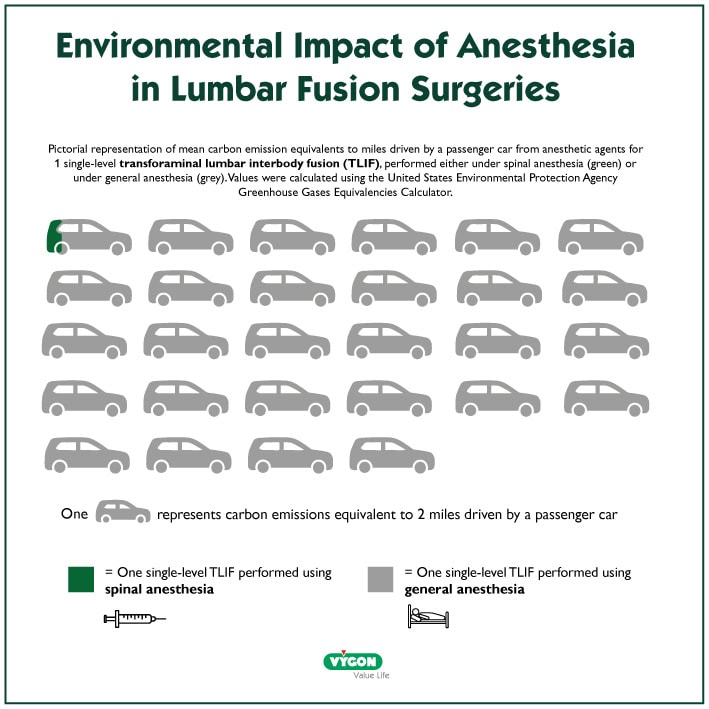
Environmental impact comparison of general vs spinal anesthesia in TLIF lumbar fusion surgeries, shown as CO₂ emissions equivalent to miles driven by a passenger car, based on EPA data
Clinical benefits of the LISA method

Clinical benefits of the LISA method

  Understanding the advantages of the LISA method is essential for neonatal professionals seeking evidence‑based strategies to improve respiratory outcomes in preterm infants. This infographic offers a clear, visual breakdown of both early respiratory...

read more
12 Steps of the Golden Hour of Prematurity

12 Steps of the Golden Hour of Prematurity

  This infographic summarizes the 12 essential steps of the Golden Hour of prematurity, outlining the key interventions required to stabilize a preterm newborn during the first 60 minutes of life. It highlights crucial actions such as prenatal counseling, delayed...

read more
Share This