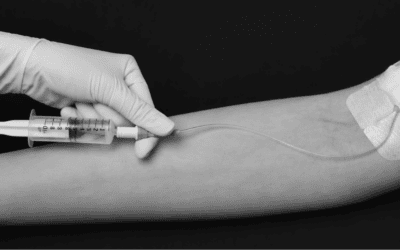

A recent webinar hosted by an interventional radiologist in Paris explored how advances in port implantation techniques are transforming the chemotherapy experience for patients. The session focused on achieving three critical outcomes in modern oncology care: efficiency, aesthetic quality and patient comfort. With the evolution of ultrasound-guided techniques and a more personalised, multidisciplinary approach, port placement in 2026 has become safer, faster and more patient-centred than ever before.
Preparation and Patient-Centred Planning
Port implantation is often the first interventional step in a patient’s cancer journey. As such, it sets the tone for the overall treatment experience. Careful preparation remains essential, including obtaining informed consent and, where possible, conducting a short pre-procedural consultation to assess access strategy, anatomy and treatment needs.
Even in time-pressured clinical environments, a brief but focused assessment immediately before the procedure can significantly improve outcomes. This includes ultrasound evaluation of vessel accessibility, determining the optimal insertion site and planning the catheter tip position. These steps ensure that the intervention is tailored to both the disease and the individual patient.
Importantly, decision-making is shared. Input from oncologists, radiologists and nursing teams, alongside patient preferences, ensures the selected approach aligns with lifestyle considerations, previous surgeries and cosmetic expectations.
Ultrasound Guidance as the Foundation of Modern Practice
In 2026, ultrasound guidance is central to efficient and safe port placement. It allows direct visualisation of vessels, enabling precise needle insertion and reducing the risk of complications such as pneumothorax or arterial injury.
Operators can now use a wide range of ultrasound technologies, from standard systems in interventional suites to compact, wireless probes connected to tablets or smartphones. These portable solutions offer high-resolution imaging with minimal setup, improving workflow efficiency and accessibility in different clinical settings.
Real-time imaging allows clinicians to puncture the vessel accurately by crossing only the anterior wall, avoiding deeper structures and ensuring optimal needle positioning. This level of control not only improves procedural safety but also enhances patient comfort by reducing repeated attempts and procedure duration.
Selecting the Right Access Route
Modern port placement is not a one-size-fits-all procedure. Instead, clinicians choose from several access routes based on treatment duration, anatomy and patient preference.
For shorter chemotherapy regimens, alternative vascular access devices may be considered. However, for longer-term treatment, chest ports and PICC-Ports are the primary options:
Chest ports can be placed via the jugular or subclavian (often axillary) vein
PICC-ports Involve the Basilic or Brachial Veins
Each option offers distinct advantages, and the choice depends on clinical and personal factors. Chest ports remain a robust, long-term solution, while PICC-Ports are increasingly popular for their minimally invasive nature and improved cosmetic outcomes.
The key principle is individualisation. Clinicians must be proficient in multiple techniques to select the most appropriate solution for each patient.
Subclavian and Axillary Access: Efficiency and Aesthetic Benefits
Subclavian or axillary vein access is increasingly favoured due to its efficiency and comfort advantages. By inserting the needle directly through the port pocket, clinicians can avoid tunnelling, reducing procedure time and complexity.
This approach also provides a more physiological catheter pathway and minimises visible scarring. Placement within the deltopectoral groove results in a discreet incision, typically one to two centimetres in length, with minimal or no visible marks on the neck or décolleté.
The result is a balance between clinical effectiveness and aesthetic outcome. Ports are positioned deeply enough to remain unobtrusive, yet accessible for nursing teams during treatment.
Ultrasound guidance further enhances this method by ensuring precise puncture of the vein, typically two to four centimetres away from the clavicle. This reduces the risk of pinch-off syndrome, a known complication caused by catheter compression between the clavicle and first rib.
Ensuring Safety and Long-Term Performance
Correct catheter tip placement is critical to reducing complications such as thrombosis. The optimal location is at the junction of the superior vena cava and right atrium. This can be confirmed using imaging methods such as chest X-ray, fluoroscopy, ECG guidance or ultrasound.
Blood return must always be verified before completing the procedure, ensuring proper function prior to initiating chemotherapy.
If complications arise, clinical management is guided by multidisciplinary decision-making. For example, ports are typically retained during anticoagulation treatment in cases of thrombosis if ongoing access is required, while infections remain the primary indication for early removal.
Once treatment is complete and no longer needed, prompt removal of the port is recommended to minimise long-term risks.
Brachial and PICC-Ports: An Evolving Alternative
Brachial port systems, including PICC-Ports, have gained significant traction in recent years. These devices combine the benefits of peripherally inserted central catheters with the durability of implantable ports.
Their advantages include:
- Minimally invasive placement
- Excellent cosmetic outcomes, particularly for patients wishing to avoid chest scars
- Suitability for intermediate-duration treatments
Potential for outpatient insertion, reducing the need for operating room resources
Recent literature highlights improved safety profiles compared to earlier data, likely due to enhanced operator experience, better patient selection and stricter maintenance protocols. In 2026, these systems are recognised as a valuable alternative when used in appropriate patients.
Efficiency, Sustainability and Healthcare Impact
Ultrasound-guided interventional radiology techniques offer clear efficiency gains compared to traditional surgical approaches. Procedures are faster, require fewer resources and reduce operating room usage.
This directly translates into cost savings, with some studies indicating that interventional approaches can cost approximately half as much as open surgical placement.
There is also an important sustainability benefit. Shorter procedures, reduced equipment use and lower resource demand contribute to a smaller environmental footprint, aligning with broader healthcare sustainability goals.
A Coordinated Approach for Optimal Outcomes
The continued evolution of port placement techniques relies on collaboration and shared expertise across multidisciplinary teams. Training, coordination and communication are essential to adopting new methods and ensuring consistently high standards of care.
Nurses play a particularly vital role, as they manage and maintain ports throughout the treatment pathway. Their involvement in decision-making helps ensure that chosen devices are practical, accessible and suited to long-term use.
Ultimately, success in port implantation is defined by three outcomes: patient comfort, procedural safety and treatment efficiency. By combining ultrasound guidance, tailored access strategies and a strong collaborative approach, clinicians in 2026 are delivering measurable improvements across all three.
Conclusion
Port placement for chemotherapy has advanced significantly, with modern techniques prioritising precision, personalisation and patient experience. Ultrasound guidance, flexible access options and minimally invasive approaches have redefined the standard of care.
By focusing equally on efficiency, aesthetics and comfort, clinicians are not only improving procedural outcomes but also supporting patients through one of the most challenging phases of their care journey.

A place to learn about health procedures and techniques from leading professionals.